

Bond ETFs 101: Why They're Stealing the Spotlight from Stocks in Late 2025
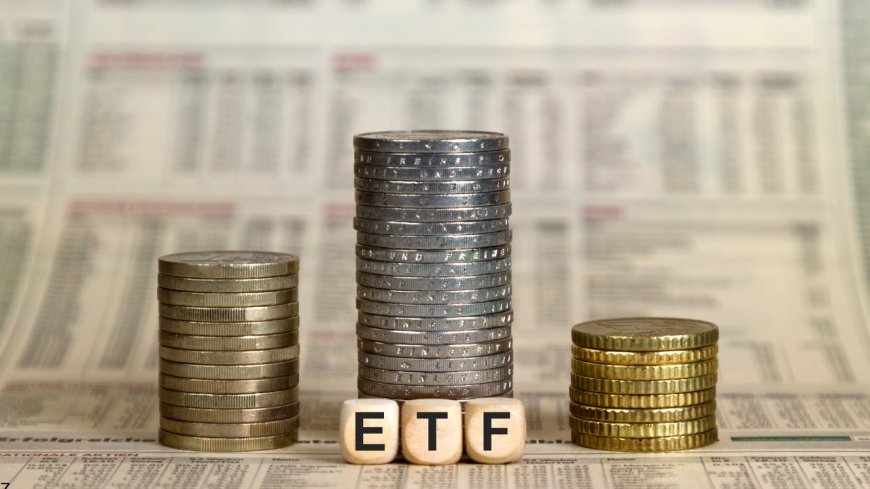
The final quarter of 2025 marks a definitive pivot in investor sentiment, shifting the spotlight away from the technology-driven mega-cap stocks that have dominated returns for the better part of a decade.
After a prolonged period where cash yielded next to nothing and investors felt forced into the equity market to seek any meaningful return, fixed income is finally back.
This renewed appeal is not simply for individual bonds, which can be cumbersome to trade, but for the accessible and diverse world of Bond Exchange-Traded Funds (ETFs). Hundreds of billions of dollars have flowed into these products throughout 2025, confirming their rise from a niche portfolio stabilizer to a primary source of investor income and total return.
This surge in popularity reflects a fundamental change in the economic landscape. Stock markets, while still demonstrating resilience, are showing signs of being "picked over" and increasingly saturated, with many valuations stretched thin against the backdrop of slowing corporate earnings growth.
In contrast, bond ETFs offer a compelling blend of competitive yield, high liquidity, and critical diversification benefits at a time when global economic forecasts remain murky and risk-averse behavior is increasing. They represent a straightforward and low-cost way for both retail and institutional investors to capitalize on the historically elevated interest rate environment, which is the direct byproduct of the Federal Reserve’s aggressive monetary policy of the past few years.
The Economic Engine Driving Fixed Income
The most potent factor fueling the bond ETF boom is the anticipated end of the Federal Reserve's rate-hiking cycle, combined with the gradual easing of policy that began earlier in 2025.
When the Fed raises rates, it depresses bond prices, punishing fixed-income holders. However, once the Fed signals that it is done hiking, or begins to cut rates, a new dynamic emerges. Investors, sensing that rates have peaked, begin locking in the high yields currently offered by new bonds before rates fall further. This rush to secure higher coupons is what drives the buying pressure on bond funds.
Furthermore, the persistent, if slightly cooling, inflation outlook has created a market sweet spot. Short-term yields have begun to decline on rate-cut expectations, while longer-term Treasury yields have remained elevated due to persistent concerns over government deficits and long-term fiscal stability. This environment of a steepening yield curve—even if still flatter than its long-term average—means investors can find attractive yields in the intermediate and long-duration segments of the market. Bond ETFs offer the perfect vehicle to efficiently access these segments, capturing high current income and setting the stage for capital appreciation if market rates continue their projected decline over the next year.
Understanding the Structural Advantages of Bond ETFs
The appeal of bond ETFs extends far beyond the current economic cycle; their structural benefits solve long-standing problems inherent in buying individual bonds.
The primary advantage is instant diversification. Investing in a single corporate bond carries significant default risk, while a single Treasury bond may not provide adequate yield. A core bond ETF, such as one tracking the U.S. Aggregate Bond Index, instantly provides exposure to hundreds or even thousands of investment-grade government, corporate, and mortgage-backed securities, drastically spreading risk across the entire spectrum.
Another critical benefit is liquidity and tradability. Unlike individual bonds, which often trade in an opaque over-the-counter market with wide bid-ask spreads and limited trading volume, bond ETFs trade like stocks throughout the day on a major exchange. This robust secondary market ensures investors can enter and exit positions quickly and transparently, making them far superior to traditional bond mutual funds, which only price once daily at the end of the market close. This feature has made them indispensable for sophisticated institutional investors and a favorite tool for individual investors managing tactical shifts in their portfolios.
Navigating the Types of Bond ETFs
The bond ETF universe is vast and offers products for nearly every risk appetite and time horizon. A crucial distinction is made by duration, which measures a bond's sensitivity to interest rate changes.
- For investors seeking high current income with minimal interest rate risk, Short-Duration Bond ETFs are ideal. These funds focus on bonds that mature quickly and are less volatile, making them a popular alternative to high-yield savings accounts or Certificates of Deposit (CDs) in the current environment.
- For those betting on a continued decline in interest rates through 2026, Longer-Duration Bond ETFs offer the potential for significant capital appreciation. As rates fall, the price of long-term bonds rises sharply.
- More specialized options, such as High-Yield Bond ETFs, offer significantly higher coupon payments but expose the investor to greater credit risk, focusing on bonds issued by companies with lower credit ratings.
Regardless of the goal—whether it is capital preservation, seeking income, or diversifying against equity risk—there is an ETF designed to meet the need, simplifying access to what was once considered a complex, institutional asset class.
The Blurring Line: Active vs. Passive Management
A key evolution in the fixed-income space is the rapid growth of actively managed bond ETFs. While passively managed index funds tracking benchmarks like the Aggregate Bond Index still hold the bulk of assets, active strategies are quickly gaining ground.
The bond market, unlike the stock market, is widely considered less efficient, meaning there are more opportunities for skilled portfolio managers to outperform by making active security selections. Active bond ETFs allow managers to dynamically adjust the fund's duration (interest rate sensitivity) and credit exposure (riskiness of the underlying bonds) in real time to navigate the volatile economic shifts of late 2025 and beyond.
This hybrid approach gives investors the potential for alpha generation—returns in excess of a benchmark—while retaining the low expense ratios, tax efficiency, and daily liquidity that define the ETF structure. This innovation is attracting sophisticated investors who previously relied solely on active bond mutual funds, further cementing the ETF structure as the dominant wrapper for fixed-income exposure.
The Portfolio Construction Angle
For long-term investors, the resurgence of bond yields fundamentally changes the dynamics of the classic 60/40 portfolio (60% stocks, 40% bonds).
For years, bonds failed to provide meaningful income, essentially reducing their role to mere equity diversification. Now, with high-quality fixed income offering attractive yields once again, the bond portion of the portfolio is generating a comfortable margin over expected future inflation, reinforcing its role as a genuine source of return.
This shift allows bonds to provide true portfolio stability and counter-cyclical performance. In a scenario where economic growth disappoints or the equity market pulls back, the capital appreciation from falling interest rates would likely cushion the portfolio's overall loss, a function bonds failed to perform adequately during the last decade of near-zero rates.
By utilizing bond ETFs, investors can easily manage and fine-tune their duration and credit risk exposure to optimize this stabilizing effect, making the 60/40 portfolio a formidable wealth management strategy once again.
What's Your Reaction?
 Like
0
Like
0
 Dislike
0
Dislike
0
 Love
0
Love
0
 Funny
0
Funny
0
 Wow
0
Wow
0
 Sad
0
Sad
0
 Angry
0
Angry
0

Finance Mastering delivers practical insights on personal finance, budgeting, investing, and money management. Whether you're just starting out or looking to grow your wealth, we make financial freedom achievable.















Comments (0)