

Could the Canadian Dollar Soon Be Worth Half a U.S. Dollar?
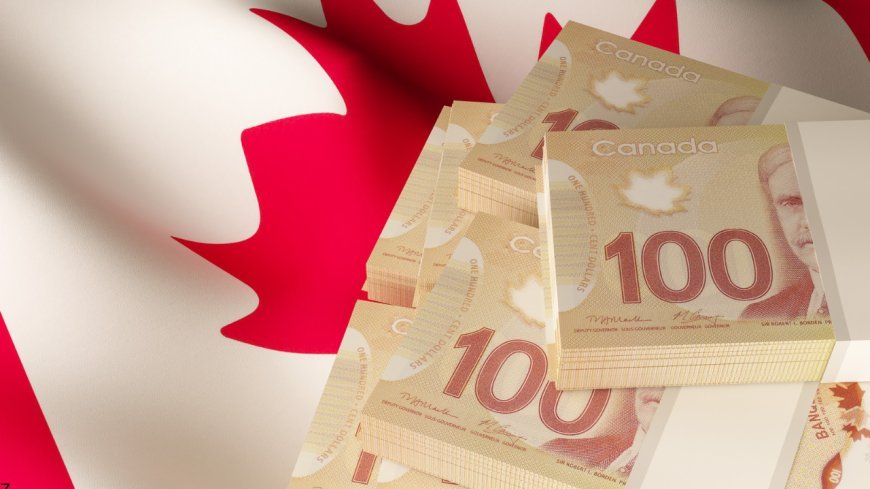
The Canadian dollar (CAD), affectionately known as the “loonie,” has been a hot topic lately. With recent volatility, trade headlines, and shifting interest rate expectations, many Canadians and investors are asking tough questions about its future value against the U.S. dollar (USD). Could the loonie really drop to levels that feel like “half” a U.S. dollar? What would drive such a dramatic move — or prevent it?
Is the Canadian Dollar Headed Toward Half a U.S. Dollar?
The short answer from current data and major forecasts is no — not in any realistic near-term scenario. But let’s explore the questions that matter: What would it take for the CAD to fall to around 0.50 USD (USD/CAD hitting 2.00)? And why do most experts see the opposite trend unfolding in 2026?
As of January 30, 2026, the exchange rate sits at approximately USD/CAD 1.36 (meaning 1 CAD ≈ 0.735 USD). This marks a solid recovery for the loonie — up about 0.9% in the latest session, with monthly gains of roughly 0.86% and a 6.5% improvement over the past year. The CAD recently touched 16-month highs near 1.35 before pulling back slightly amid mixed economic signals.
What Would It Take for the Loonie to Plunge to 0.50 USD?
A drop to half parity would require extreme, sustained negative shocks far beyond typical cycles. Think:
• Prolonged collapse in global commodity prices (especially oil, a cornerstone of Canadian exports).
• Massive widening of interest rate differentials favoring the USD indefinitely.
• Severe, unresolved trade disruptions or tariffs hitting Canadian exports hard.
• Deep Canadian recession with no recovery in sight, while the U.S. economy surges.
Historical context: The CAD’s all-time low against the USD was around 0.62–0.63 in the early 2000s (USD/CAD ~1.62). Even in tough periods like 2015–2016 or 2020, it never approached 0.50. No major economic model or bank forecast contemplates such a level — it would imply an unprecedented divergence in North American economies.
What Do the Experts Actually Expect for 2026?
Consensus from banks, analysts, and models leans toward gradual CAD strengthening, not collapse:
• Trading Economics projects USD/CAD around 1.35 in 12 months (CAD ≈ 0.74 USD).
• Reuters poll (January 2026) of 38 FX analysts sees median at 1.35 by year-end (up from prior 1.36), with gains tied to Fed easing and trade stability.
• TD Economics forecasts CAD per USD at 1.36 overall in 2026, trending toward 1.33–1.35 later.
• RBC Capital Markets eyes USD/CAD drifting to 1.34 by end-2026, assuming Bank of Canada policy flexibility.
• Macquarie and others target 1.31 (CAD ≈ 0.76–0.77 USD), citing strong U.S.-Canada trade ties.
• Scotiabank (earlier 2026 views) suggested potential for 75 US cents by year-end.
• LongForecast and similar models see ranges like 1.31–1.43, with many pointing to lower USD/CAD by late 2026.
These imply the loonie potentially climbing to 0.74–0.77 USD — the reverse of dramatic weakness.
Key Factors That Could Shape the Loonie’s Path in 2026
Bullish for CAD (strengthening drivers):
• Narrowing rate gaps: Fed likely cuts more than Bank of Canada (which has signaled a pause after reaching 2.25%).
• Trade optimism: Peak USMCA/tariff uncertainty appears behind us, supporting cross-border flows.
• Broader USD softness: U.S. dollar index at multi-year lows amid policy shifts.
• Canadian recovery: Expected rebound in domestic demand despite current excess supply.
Bearish risks (potential weakness):
• Weak oil prices dragging on terms of trade.
• Renewed trade or geopolitical flare-ups.
• Disappointing Canadian growth data.
Even pessimistic views keep USD/CAD well above 1.40 — nowhere near levels implying 0.50 USD parity.
The Bottom Line: Questions Over Panic
The Canadian dollar isn’t on a one-way ticket to half a U.S. dollar. Forecasts overwhelmingly point to stability or modest gains through 2026, driven by converging monetary policies and resilient trade links. Extreme depreciation scenarios remain hypothetical outliers, not base cases.
Markets move fast — influenced by daily data, central bank decisions, and global events — so the loonie’s story is far from over. For businesses, travelers, or investors, the smarter approach is monitoring live rates and considering hedging tools rather than betting on doomsday drops.
What's Your Reaction?
 Like
0
Like
0
 Dislike
0
Dislike
0
 Love
0
Love
0
 Funny
0
Funny
0
 Wow
0
Wow
0
 Sad
0
Sad
0
 Angry
0
Angry
0

Passionate about breaking down complex finance-related concepts into simple terms to help everyday people.















Comments (0)