

Mortgage Rates in Flux: Will 2026 Finally Deliver Sub-6% Deals?
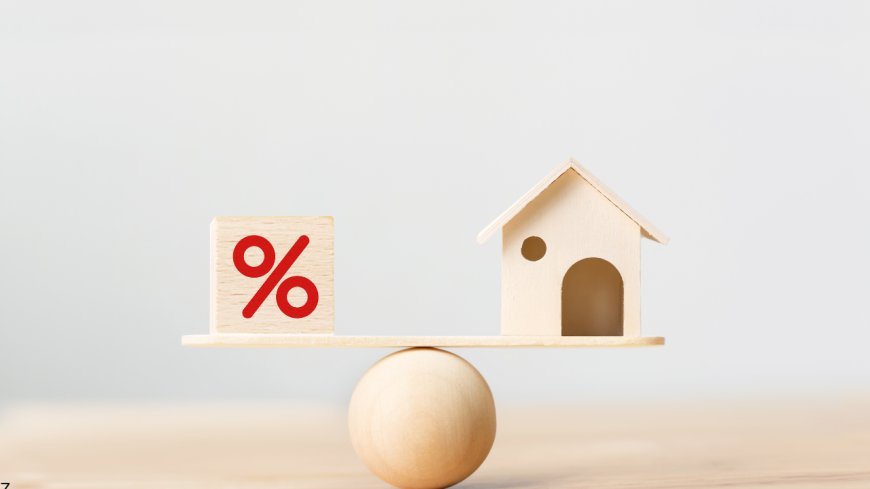
As we approach the end of 2025, the mortgage market remains a complex puzzle for prospective homebuyers and homeowners looking to refinance. After a tumultuous few years defined by rapid rate hikes and affordability challenges, the dust has somewhat settled, but the picture is far from the ultra-low interest rate environment of the early 2020s. Currently, 30-year fixed mortgage rates have been hovering in the low-to-mid 6% range, a slight improvement from the peaks seen in 2023 and 2024, yet still stubbornly high for a generation of buyers accustomed to cheap debt. This period of stabilization has brought a degree of predictability back to the market, but it has not triggered the massive wave of activity that many industry insiders had hoped for.
The persistent question on everyone’s mind is whether 2026 will be the year rates finally break the psychological barrier of 6%. For many, this threshold represents the difference between an affordable monthly payment and being priced out of their desired neighborhood. While the Federal Reserve has initiated a cycle of rate cuts to support a softening economy, mortgage rates have not moved in lockstep, illustrating the complicated relationship between central bank policy and the long-term bond markets. As we look toward the new year, the tension between lingering inflation fears and the need for economic stimulus will define the trajectory of borrowing costs.
Expert Forecasts: A Divided Outlook for 2026
Financial institutions and housing authorities offer a mixed bag of predictions for the coming year, reflecting the uncertainty of the broader economic climate. Fannie Mae, traditionally one of the more optimistic voices in the room, has projected that the 30-year fixed-rate mortgage could gradually decline throughout 2026, potentially ending the year near 5.9%. Their forecast hinges on a successful "soft landing" for the economy, where inflation cools to the Federal Reserve's 2% target without triggering a deep recession. If this scenario plays out, the risk premium that lenders attach to mortgages would shrink, allowing rates to drift downward into the high 5% range for the first time in years.
On the other side of the spectrum, the Mortgage Bankers Association (MBA) and major private lenders like Wells Fargo maintain a more conservative outlook. Their analysts suggest that while some easing is likely, rates are probable to remain sticky, averaging between 6.3% and 6.6% for much of 2026. This caution is driven by the belief that structural economic factors, such as government budget deficits and sustained wage growth, will keep the yield on the 10-year Treasury note elevated. In their view, while the trend is technically downward, the slope is so gentle that borrowers might not feel a significant difference in their day-to-day purchasing power until late in the year or even into 2027.
The Economic Levers: Why Rates Aren't Plummeting
To understand why mortgage rates haven't collapsed despite the Federal Reserve's recent pivots, one must look at the 10-year Treasury yield, which serves as the benchmark for 30-year mortgage rates. Historically, the spread between the 10-year yield and mortgage rates is about 1.7 to 2 percentage points. However, throughout late 2024 and 2025, this spread widened significantly due to volatility in the bond market and uncertainty about the long-term path of inflation. Investors demanded a higher return for holding mortgage-backed securities, keeping consumer rates artificially high relative to the underlying economic data.
Furthermore, the "term premium"—the extra compensation investors require for lending money over long periods—has risen. This is partly due to the massive supply of government debt being issued to fund federal deficits. When the government floods the market with Treasury bonds, it puts upward pressure on yields, which drags mortgage rates up with it. Even if the Fed cuts short-term rates to stimulate the economy, long-term rates may stay buoyant if the market worries about the government's fiscal health or a resurgence of inflation. This disconnect explains the frustration many borrowers feel: they hear news of "rate cuts" but see little change when they apply for a loan.
Historical Context: Accepting the New Normal
It is crucial for today’s buyers to reframe their expectations by looking at historical data rather than just the anomaly of the pandemic years. The sub-3% rates of 2020 and 2021 were the result of a global emergency and unprecedented government intervention, not a sustainable market feature. If we look back to the 1990s and early 2000s, mortgage rates frequently oscillated between 6% and 8%, yet the housing market remained robust. In this context, a rate of 6.2% is not historically "high," but rather a return to a more traditional cost of capital.
Accepting this "new normal" is a difficult pill to swallow, particularly because home prices have not corrected downward to compensate for higher borrowing costs. In previous cycles, higher rates often cooled home values, keeping affordability in check. This time, however, a chronic shortage of housing inventory has kept a floor under prices. As a result, the monthly payment for a median-priced home is significantly higher than it was just five years ago, not just because of the rate itself, but because the principal loan amount has ballooned. Buyers in 2026 will likely need to make peace with rates in the 6% range and focus instead on refinancing strategies down the road.
Inventory and the "Lock-In" Effect
One of the primary drivers of the current stalemate is the "lock-in" effect, where millions of homeowners are clinging to existing mortgages with rates between 2% and 4%. These owners are disincentivized to sell, as trading a 3% rate for a 6.5% rate would mean a drastic increase in monthly payments for a similar or even smaller home. This phenomenon has severely restricted the supply of existing homes for sale, creating a competitive environment even with depressed demand.
If rates do dip below 6% in 2026, we may see a slight thawing of this inventory freeze. A rate in the high 5% range might be "low enough" for some life-event movers—those needing to relocate for jobs, marriage, or growing families—to finally list their homes. This increase in supply would be healthy for the market, offering buyers more choices and potentially moderating the pace of price appreciation. However, a massive flood of inventory is unlikely; the gap between 3% and 5.9% is still too wide for discretionary sellers to bridge without a compelling personal reason.
Strategies for Homebuyers in 2026
For those determined to buy in 2026, waiting for the "perfect" sub-6% rate might be a losing strategy if it leads to missing out on the right property. A popular adage in the industry—"date the rate, marry the house"—remains relevant. Buyers should prioritize finding a home that fits their long-term needs and budget at current rates, with the specific plan to refinance if and when rates drop. The risk of waiting is that a drop in rates could trigger a surge in buyer demand, pushing home prices up further and negating the savings from the lower interest rate.
Another viable strategy for 2026 is the use of Adjustable-Rate Mortgages (ARMs). With the yield curve inverted or flat, ARMs often offer a lower introductory rate than their fixed-rate counterparts. A 5/1 or 7/1 ARM could provide a rate in the mid-5% range immediately, offering significant monthly savings during the initial years of homeownership. This approach carries risk, of course, but for buyers who plan to move, refinance, or pay off the loan within five to seven years, it can be a financially savvy tool to bypass the current premium on 30-year fixed loans.
The Refinancing Opportunity
While the purchase market grabs the headlines, 2026 could quietly become a strong year for refinancing. Homeowners who purchased properties in late 2023 or 2024, when rates spiked above 7.5% or even 8%, are prime candidates for relief. Even a modest drop to 6.2% or 6.0% represents a meaningful reduction in interest expenses for these borrowers. For a $400,000 loan, a 1.5% rate reduction can save hundreds of dollars a month, freeing up cash flow for other investments or consumption.
Lenders are already gearing up for this "mini-refi" boom, identifying clients with current rates above 7% for proactive outreach. Homeowners in this category should monitor the market closely and keep their credit scores polished. The window to refinance might open and close quickly depending on economic reports, so being ready to lock in a rate at a moment's notice will be advantageous. It is not just about getting to 5%; getting out of 7.5% is a financial win in its own right.
Conclusion: Navigating a Year of Transition
Ultimately, 2026 shapes up to be a year of transition rather than transformation for the mortgage market. While the tantalizing prospect of sub-6% rates is on the horizon, it is likely to be a gradual drift rather than a dramatic plunge. The economic fundamentals suggest stability, but the days of "free money" are firmly in the rearview mirror.
For consumers, success in this environment requires agility and a focus on the long game. Whether that means leveraging an ARM, buying now to build equity before prices rise further, or refinancing a high-rate loan from 2024, the opportunities are there for those who look past the headline number. The market may be in flux, but informed decisions are always stable currency.
What's Your Reaction?
 Like
0
Like
0
 Dislike
0
Dislike
0
 Love
0
Love
0
 Funny
0
Funny
0
 Wow
0
Wow
0
 Sad
0
Sad
0
 Angry
0
Angry
0

Finance Mastering delivers practical insights on personal finance, budgeting, investing, and money management. Whether you're just starting out or looking to grow your wealth, we make financial freedom achievable.













Comments (0)