

How W-4 Withholding Works: Getting Your Paycheck Closer to Your Tax Bill
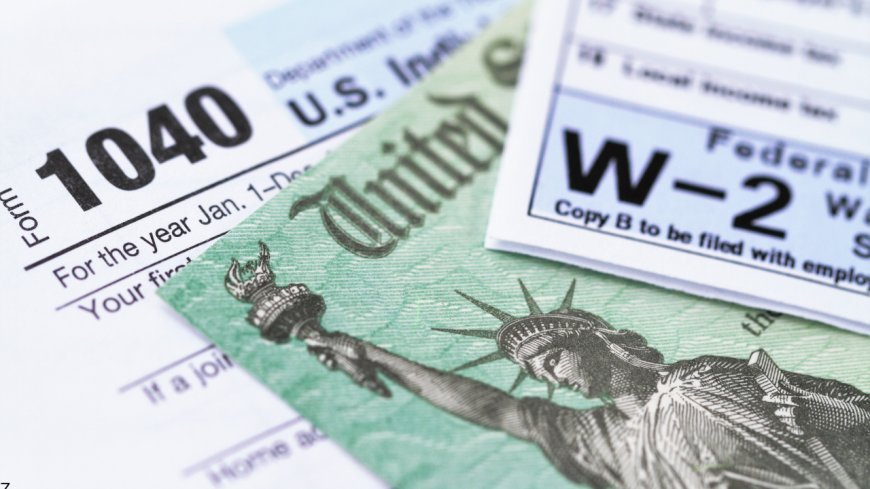
Withholding is an estimate, not a grade
Every paycheck, your employer sends money to the IRS (and often to your state) on your behalf. That is withholding. Form W-4 is how you tell payroll how to estimate your federal income tax for the year.
If withholding is too high, you get a large refund — an interest-free loan you gave the government. If it is too low, you may owe a balance due and, in some cases, an underpayment penalty. The goal for most households is neither maximizing the refund nor minimizing every paycheck: it is landing close to your actual tax.
What changed on the modern W-4
Older W-4 forms used “allowances.” The redesign (phased in after the Tax Cuts and Jobs Act changed withholding math) removed allowances and asks more directly about:
- Filing status
- Multiple jobs or a working spouse
- Dependents / child-related credits (as the form instructs for the tax year)
- Other income (interest, dividends, side work) not subject to withholding
- Deductions beyond the standard deduction
- Extra withholding you want taken each pay period
You are not filing your tax return on the W-4. You are giving payroll a better guess.
How employers turn a W-4 into a paycheck number
Payroll systems use IRS withholding tables and your form entries, combined with your pay frequency and taxable wages, to compute federal income tax withheld each period. Separate lines on your pay stub typically cover Social Security and Medicare (FICA), which follow different rules and are not controlled by the same W-4 income-tax elections.
If your stub looks “high” on taxes, separate income-tax withholding from FICA before you rewrite the W-4. Fixing the wrong problem wastes a pay cycle.
Life events that should trigger a W-4 update
Update withholding when your tax picture changes, not only every January:
- Marriage or divorce / filing-status change
- Spouse starts or stops working
- Birth or adoption of a child (credits and household income change)
- Second job, gig income, or large bonus pattern
- Home purchase with large deductible interest/taxes (if you itemize)
- Side income without withholding
- You consistently get a huge refund or a painful bill
A W-4 filed years ago under different circumstances is a common cause of April surprises.
Multiple jobs: the classic underwithholding trap
Two jobs at $40,000 are not taxed like one job at $40,000. Each employer, left alone, may withhold as if that job were your only income — which underestimates your combined bracket.
The W-4 has a multiple-jobs section and worksheets (and the IRS has an online Tax Withholding Estimator). Options typically include:
- Checking the multiple-jobs box as instructed
- Using the estimator and entering extra withholding on the higher-paying job
- Having only one job’s W-4 carry the extra complexity while the other stays simpler
Guessing without the worksheet is how dual-income households underwithhold.
Refunds vs paycheck cash flow
A large refund feels like a windfall. Economically it is usually over-withholding. Some people prefer it as forced savings. That is a behavioral choice, not a tax strategy. If high-interest debt or missing emergency cash is the real problem, over-withholding may be an expensive comfort habit — you could have used that cash during the year.
Conversely, optimizing to a $0 refund while living paycheck-to-paycheck with no buffer can create stress if a repair hits in March. Aim near break-even *and* keep a short-term cash reserve.
Other income and estimated taxes
W-4 withholding primarily addresses wages. If you have substantial:
- Self-employment income
- Taxable investment income
- Unemployment (rules vary by year and election)
- Retirement withdrawals
…you may need estimated tax payments (Form 1040-ES) or extra withholding on wages to cover the gap. Extra withholding on a W-4 can sometimes substitute for quarterly estimates for wage earners with side income — run the numbers rather than assuming wages alone will cover everything.
State W-4 forms
Many states have their own withholding forms and allowances. Updating federal W-4 does not automatically fix state withholding. If you moved between states, remote-work across state lines, or saw state refund/bill patterns diverge from federal, check the state form too.
A practical tuning process
- Gather last year’s return, current pay stubs, and expected changes for this year.
- Use the IRS Tax Withholding Estimator (or a careful worksheet) with realistic income — include bonuses if they are likely.
- Submit a new W-4 to payroll; confirm the next stub reflects the change.
- Recheck mid-year after raises, job changes, or large irregular income.
- In December, glance at year-to-date withholding versus expected tax if you had a volatile year.
Do not submit extreme W-4 entries to game a refund without understanding underpayment rules. “Exempt” withholding has strict eligibility; claiming it incorrectly creates problems.
Bonuses and supplemental wages
Bonuses may be withheld at supplemental rates or aggregated with regular pay, depending on payroll method. A large bonus can look “over-taxed” on that stub even when your annual withholding is reasonable. Evaluate bonuses in annual context before rewriting your entire W-4 after one payday.
Reading your pay stub like a withholding report
Find year-to-date federal income tax withheld, not only the current period. Compare that to a rough estimate of annual tax from last year’s return adjusted for raises. If you are in October and only 40% of expected annual tax has been withheld while income is steady, you may be heading for a bill. If you are in March and already heavily withheld after a bonus, you may still finish near even — evaluate annually.
Also separate:
- Federal income tax
- Social Security / Medicare
- State and local income tax
- Benefit premiums
Only the income-tax lines are what the W-4 is trying to steer.
Underpayment penalties in plain English
The U.S. tax system expects you to pay as you go. If withholding plus estimated payments are too low relative to your tax, you may owe an underpayment penalty even if you pay the balance in April. Safe-harbor rules (such as withholding a percentage of last year’s tax, with special rules for higher incomes) can protect you — details change and depend on your situation, so use IRS guidance or a tax pro when income is lumpy. The W-4 is one tool to stay inside those guardrails without making quarterly estimated payments, especially for W-2 households with modest side income.
Common W-4 mistakes
- Ignoring a spouse’s job and letting both employers withhold as if each job were the only income.
- Claiming credits incorrectly on the form worksheets without following the year’s instructions.
- Setting extra withholding to $0 forever after a one-time high-income year, then underwithholding when income normalizes the other way.
- Confusing FICA with income tax and “fixing” the wrong problem.
- Never revisiting the form after remote-work moves, equity compensation, or a side business.
Bottom line
Form W-4 tells your employer how to estimate federal income tax withholding. Keep it aligned with filing status, multiple jobs, dependents, and other income so your paycheck and your eventual tax bill stay in the same neighborhood. Update after life changes, use the IRS estimator when household income is complicated, and treat giant refunds as a cash-flow signal — not a scoreboard win.
Use the IRS estimator when the worksheet is not enough
The paper W-4 is designed to work for many households, but it cannot anticipate every combination of wages, bonuses, investment income, credits, and deductions. The IRS withholding estimator can be useful after a major change or when a household has several income sources. It uses current pay information and the tax already withheld to estimate whether the existing setup is likely to create a refund or balance due.
Before using an estimator, collect recent pay stubs for both spouses, the prior-year return, expected bonus information, and estimates of nonwage income. The result is only as useful as the inputs. A projection made early in the year should be reviewed after a job change, raise, large bonus, or material change in investment income.
Bonuses and irregular pay can distort the picture
A bonus may be withheld using a supplemental wage method that does not match the employee's final marginal tax rate. That does not mean the bonus is taxed under a separate tax system. At filing time, wages and bonuses generally become part of the same annual income calculation. The temporary withholding rate may create either excess withholding or a shortfall depending on the rest of the return.
Commission income, overtime, equity compensation, and seasonal work can create similar mismatches. Employees with variable pay should review year-to-date totals instead of judging withholding from one unusually large paycheck. If income is unpredictable, a modest additional dollar amount on each remaining paycheck can be easier to manage than repeatedly changing filing inputs.
Coordinate withholding with estimated tax payments
Households with freelance work, business income, rent, taxable investment distributions, or significant interest may need quarterly estimated payments. Increasing wage withholding can sometimes cover part of that obligation. Federal income tax withheld from pay is generally treated as paid throughout the year, which can make a late-year adjustment useful in some situations.
Do not assume that withholding and estimated payments should be calculated independently. Look at the projected total tax, expected credits, payments already made, and withholding expected through December. State requirements must be reviewed separately because a federal W-4 does not automatically correct state withholding.
Understand the safe-harbor concept
The goal does not always have to be perfect dollar-for-dollar withholding. Federal underpayment rules include safe-harbor concepts based on paying enough through withholding and timely estimated payments. The applicable threshold can depend on prior-year tax and income. A household expecting a major income increase should not rely on a casual percentage without checking the current rules or obtaining professional advice.
Safe harbor may reduce penalty exposure, but it does not erase the remaining tax bill. Someone can satisfy a payment threshold and still owe a meaningful amount when filing. Keep cash available for the expected balance rather than treating penalty avoidance as proof that nothing else is due.
Review the result instead of repeatedly guessing
After submitting a new W-4, compare the next complete paycheck with the prior one. Confirm that federal withholding changed in the intended direction and that payroll applied the request. Then review year-to-date withholding again after several pay periods. A single check may include retroactive pay, unpaid leave, a bonus, or benefit changes that make it a poor baseline.
Keep a copy of the submitted form and note why the change was made. That record helps when a later paycheck looks different or when the household reviews its tax position near year-end. Avoid changing the form every time a refund estimate moves slightly. Material changes in income, deductions, credits, or household circumstances are better triggers.
A practical W-4 review checklist
- Confirm the filing status reflects the expected tax return.
- Account for multiple jobs and a working spouse.
- Estimate bonuses and other variable compensation.
- Include material interest, investment, business, or rental income.
- Review credits and itemized deductions realistically.
- Compare projected tax with withholding and estimated payments already made.
- Check the next full paycheck after payroll processes the change.
Bottom line
A W-4 is a planning tool, not a promise of an exact refund. The most reliable approach is to use complete household information, review the result after meaningful changes, and coordinate wage withholding with other tax payments. Aim for a manageable filing outcome without sacrificing more take-home pay than necessary throughout the year.
Frequently Asked Questions
What's Your Reaction?
 Like
0
Like
0
 Dislike
0
Dislike
0
 Love
0
Love
0
 Funny
0
Funny
0
 Wow
0
Wow
0
 Sad
0
Sad
0
 Angry
0
Angry
0

Shula is an experienced content writer with a strong background in developing engaging and informative articles. She has written across diverse topics, including personal finance, lifestyle, food, and travel. With a clear and adaptable writing style, Shula brings value by making complex subjects accessible to a broad audience.











Comments (0)