

FICO vs VantageScore: What Actually Differs for Borrowers
Two brands, one underlying idea
A credit score is a three-digit summary of how lenders estimate the risk that you will miss payments. FICO and VantageScore are competing scoring systems built from the same raw material: your credit reports at Equifax, Experian, and/or TransUnion.
They are not “good credit” versus “bad credit.” They are different recipes applied to similar ingredients. That is why you can see several scores at once that do not match — and why none of them is automatically “the real one.”
Who builds what
FICO (Fair Isaac Corporation) produces the scores most widely used in U.S. lending decisions, especially for mortgages, auto loans, and many credit cards. Lenders often buy a specific FICO version tied to a bureau (for example, a mortgage-focused FICO model).
VantageScore is a scoring model developed by the three major credit bureaus as a joint venture. Many free credit-monitoring tools and some lenders display VantageScore results. Visibility in apps does not automatically mean every underwriter uses that same number.
The practical takeaway: the score you see in a free dashboard may not be the score a mortgage underwriter pulls next month.
What both models generally emphasize
Despite brand differences, both systems typically weigh familiar themes:
- Payment history (on-time vs late or defaulted)
- Amounts owed and credit utilization
- Length of credit history
- Mix of credit types
- Recent applications / new accounts
If you pay on time, keep revolving balances reasonable relative to limits, and avoid unnecessary hard inquiries, you are usually helping *any* mainstream score. You do not need a separate lifestyle for “FICO health” versus “VantageScore health.”
Where the models can diverge
Exact formulas are proprietary and change across versions, but borrowers commonly notice differences in:
Scoring range and labels
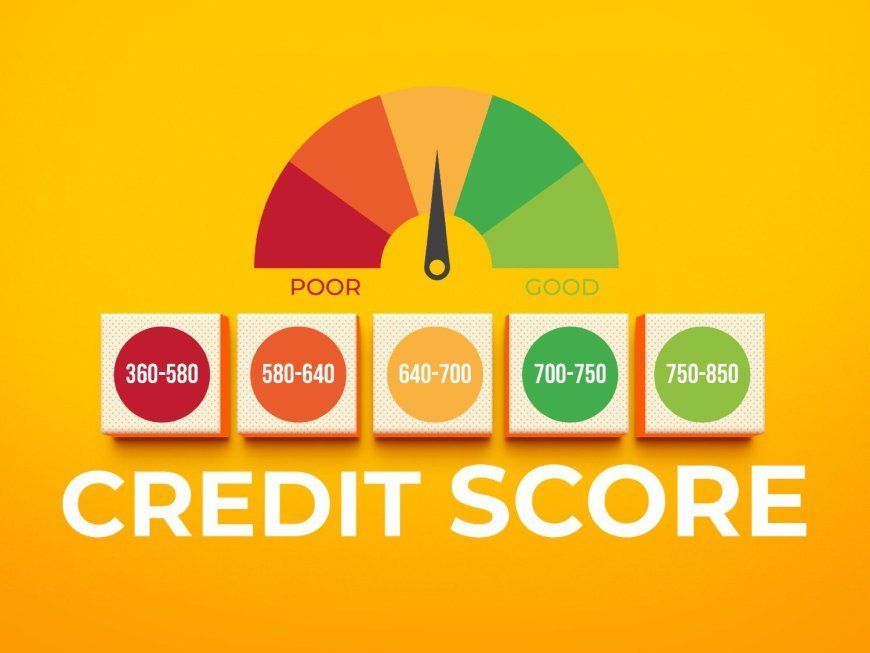
Both commonly use a roughly 300–850 style range in consumer versions, but version details and educational labels (“good,” “excellent”) are marketing overlays, not legal grades. A lender’s cutoff is what matters for approval and pricing.
How thin or young files are handled
Some model versions are designed to score people with shorter or thinner histories more readily than older versions of competing models. If you are new to credit, one free score might appear while another product says you are unscorable — or shows a very different number.
Treatment of specific behaviors
Models can differ in how quickly they reward paying down utilization, how they treat collections or medical collections (rules have also evolved with industry and reporting practices), and how they weigh authorized-user accounts. Do not assume a tactic that moved one monitoring score will move a lender’s pull by the same amount.
Version sprawl
“FICO” is not one number. There are multiple FICO Score versions used for different products. Auto lenders, credit-card issuers, and mortgage lenders may not pull the same version. VantageScore likewise has version history (for example, VantageScore 3.0 vs 4.0 in market conversation). Comparing an app’s VantageScore 3.0 to a lender’s FICO Auto Score is an apples-to-oranges exercise.
Mortgages are a special case
For many conventional mortgage underwrites in the U.S., lenders historically rely on specific FICO mortgage scores pulled from the bureaus — not whatever free score is on your phone. Pricing adjustments and eligibility overlays can hinge on that lender pull.
Before a home purchase:
- Check your credit reports for errors (AnnualCreditReport.com is the official channel for free weekly reports in the U.S. under current CFPB guidance — confirm current access rules when you pull).
- Ask your loan officer which score versions they use and what minimums apply for the program you want.
- Treat free monitoring scores as early-warning dashboards, not closing guarantees.
Why your three bureau scores disagree
Even within one brand, scores can differ across Equifax, Experian, and TransUnion because:
- Not every creditor reports to every bureau
- Update timing differs
- A dispute or correction may have posted to one file first
When a lender “soft pulls” or “hard pulls,” they choose which bureau(s) and which model. Mortgage “tri-merge” files combine data; the usable scores still depend on what the investor guidelines require.
What to optimize instead of the brand name
Chase a healthy *file*, not a favorite logo.
High-impact habits
- Pay every account on time. Payment history dominates most models.
- Keep credit-card utilization lower if you are actively shopping for a loan — many people aim well under 30% of limits, and lower often looks better, though there is no single magic number that guarantees a score.
- Avoid opening multiple new accounts in a short window before a major application.
- Keep old accounts open if they have no fee and no risk of misuse; average age of accounts can matter.
- Dispute clear errors with documentation.
Low-value obsessing
- Refreshing a free score daily
- Closing cards solely to “simplify” right before a mortgage
- Paying for expensive score products that do not match your lender’s model
Soft vs hard inquiries (briefly)
Checking your own credit or using many monitoring tools typically generates a soft inquiry, which does not hurt scores the way a lender’s hard inquiry can. Rate-shopping for mortgages or autos within a compressed window is often treated more gently than spreading applications over many months — but rules depend on score version and product. When in doubt, ask the lender how they treat shopping.
A practical borrower checklist
- Pull your reports and fix factual errors first.
- Know the product you want (card, auto, mortgage) and ask which score family/version is typical.
- Use free scores as trend indicators: direction over weeks matters more than a 10-point blip.
- Make payment and utilization changes early — score models need time and reporting cycles to catch up.
- Do not freeze progress waiting for two brands to show identical numbers. They may never match.
Hard inquiries when you actually apply
When you apply for a card, auto loan, or mortgage, the lender’s hard pull can shave points temporarily. The larger issue is stacking many hard pulls across months for unrelated products. Rate-shopping for one mortgage or one auto loan within a short window is often treated more gently by scoring models than five unrelated applications across a quarter — but the exact window and treatment depend on the score version. If you are ninety days from a home purchase, pause opportunistic store-card offers.
Authorized users and piggybacking
Being added as an authorized user can help a thin file if the primary account is well managed — and can hurt if it is not. Score models differ in how much weight they give authorized-user history. Treat piggybacking as a limited tool, not a substitute for your own on-time accounts.
Collections, charge-offs, and time
Negative items generally hurt less as they age, and some paid collections weigh differently across model versions and industry reporting changes. Paying a collection may help lending overlays even when the score move is modest. For mortgages, underwriting guidelines can be stricter than the score model alone. Ask the loan officer what must be cleared regardless of the three-digit number.
Bottom line
FICO and VantageScore are competing ways to summarize the same credit-report story. Lenders care about the specific model they pull for your application; free apps care about engagement. Build strong payment history, control revolving balances, and verify your reports. Let brand-name score gaps be informational noise — not a second full-time job.
Different industries may use specialized versions
A lender may use a model designed for auto lending, bankcards, mortgages, or general credit risk. That specialized score can differ from a consumer-facing score even when both carry the FICO name. VantageScore also has multiple generations. Comparing numbers without identifying the brand, version, bureau, and date can create unnecessary confusion.
Mortgage lending can involve older model versions and scores from more than one bureau. The score used for qualification may follow lender and loan-program rules rather than the number displayed by a free monitoring service. Ask which reports and versions will be used, but understand that a loan officer may not be able to predict the final score before the formal pull.
Credit reports matter more than brand arguments
Both scoring families analyze information from credit reports. A late payment, high card balance, collection, or reporting error can influence multiple scores even when the exact point change differs. Reviewing the underlying reports is therefore more actionable than trying to reverse-engineer every model.
Obtain reports from the authorized source, compare accounts across bureaus, and dispute information that is genuinely inaccurate. Do not dispute accurate negative items simply because they are unfavorable. Keep documentation and allow time for legitimate corrections to be investigated and updated.
Rate shopping can be treated differently from repeated applications
Some scoring models group certain mortgage, auto, or student-loan inquiries made within a shopping window, but the length and treatment can vary by model. Credit-card applications are generally not grouped in the same way. Consumers should complete serious loan shopping within a focused period rather than stretching applications across many months.
Checking one's own report or score generally uses a soft inquiry and does not have the same scoring effect as applying for credit. Confirm what type of inquiry a service or lender will use before authorizing access.
Score changes require reporting time
Paying a balance today may not change a score tomorrow. The issuer must report updated information, the bureau must process it, and a new score must be calculated using the later report. Reporting dates differ across accounts. A score can also move for unrelated reasons while the update occurs.
Someone preparing for a major application should begin several billing cycles early. Pay every account on time, reduce revolving balances, avoid unnecessary new credit, and keep older accounts open when they remain suitable and fee-free. Sudden tactics cannot erase serious recent delinquencies.
Monitor trends without chasing every point
Consumer scores are useful for tracking direction and detecting unexpected changes. A difference of several points between apps does not automatically indicate an error. Look for significant movement and then inspect the reports, balances, inquiries, and account status behind it.
The goal is not to make every scoring model display the same number. It is to maintain credit behavior that models and lenders generally view as lower risk while keeping debt affordable. Income, assets, loan-to-value ratios, and underwriting rules also affect approval.
Borrower preparation checklist
- Identify the score brand, version, bureau, and date.
- Review all credit reports for accurate information.
- Pay every account by the due date.
- Reduce revolving balances without draining emergency savings.
- Limit unnecessary applications.
- Keep loan shopping within a focused period.
- Ask the lender which model family is relevant.
Bottom line
FICO and VantageScore are model families, not single universal numbers. Differences often come from the version, bureau, reporting date, and purpose of the score. Consumers can make progress without mastering every formula by maintaining accurate reports, low manageable card balances, on-time payments, and restrained applications.
Protect personal information while monitoring
Use reputable services, unique passwords, and multifactor authentication when available. A score does not require surrendering bank credentials to an unfamiliar provider. Review privacy terms and understand whether the service is free because it markets credit products. Monitoring is most valuable when it helps identify inaccurate reporting or possible identity theft without encouraging unnecessary applications.
Frequently Asked Questions
What's Your Reaction?
 Like
0
Like
0
 Dislike
0
Dislike
0
 Love
0
Love
0
 Funny
0
Funny
0
 Wow
0
Wow
0
 Sad
0
Sad
0
 Angry
0
Angry
0

James Johnson has 10+ years in fintech. He holds an MBA and an MS in Information Technology, and writes about how AI and personal finance actually meet for everyday investors.
















Comments (0)