

FICO Credit Scores vs the 10-Year Treasury — What Each Means for What You Pay

Two numbers dominate mortgage conversations in 2026, and they do completely different jobs. Your FICO score helps decide which pricing tier you land in - how much extra (or how little) a lender adds for credit risk on top of the market. The 10-year U.S. Treasury yield helps set the rate environment - the wholesale backdrop that moves almost everyone's quotes when bond markets reprice. Mix them up and you get frustrated headlines: "Treasury yields dropped - why didn't my Loan Estimate?"
This is education only, not a rate lock, credit repair pitch, or forecast. Lenders price differently. Score models and overlays change. Spreads widen and narrow. Use what follows to separate what you can influence (credit profile, loan structure, shopping discipline) from what you cannot (overnight bond moves, investor appetite for mortgage bonds), and to read those "rates fell but my quote didn't" moments with clearer eyes.
Two dials, one monthly payment
Your principal-and-interest payment is driven by loan size, term, and note rate. The note rate is not a single national number. It is closer to:
Base market rate (shaped heavily by Treasuries, mortgage-backed securities, and lender costs) + risk-based pricing adjustments (credit, loan-to-value, occupancy, loan purpose, and product rules) ± points and credits you choose at the table.
FICO mainly lives in the second bucket. The 10-year mainly lives in the first. Both show up in the same monthly payment, which is why people talk about them as if they were rivals. They are not. One is a personal risk label the secondary market uses for you. The other is a market thermometer for everyone shopping that day.
What FICO actually does in mortgage pricing
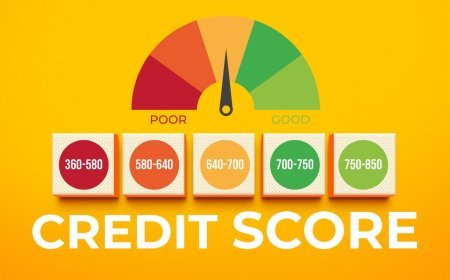
FICO scores summarize patterns in credit reports: payment history, amounts owed, length of history, mix of credit, and recent inquiries/new accounts. Mortgage lenders typically use scores from the major bureaus and often price off the middle score when three are pulled (or the lower of two). Exact practices vary by lender and product.
For conventional loans that sell into agency channels, credit often maps into loan-level price adjustments (LLPAs) - fees or rate add-ons that reflect historical loss experience by credit band and other risk factors. In plain terms: a 780 file and a 640 file are not offered the same "par" rate for the same loan size and down payment, even when the 10-year yield is identical that morning. Lower scores, thinner files, recent late payments, high utilization, or collections can push you into worse tiers, different products (FHA, non-QM, portfolio), or additional overlays that are not in the public rate sheet you saw on a comparison site.
Important nuance: score is a pricing and eligibility input, not a moral grade and not the whole underwriting file. Income stability, debt-to-income, assets, appraisal, employment, and occupancy still matter. A high score with a fragile DTI can still struggle. A middling score with strong equity, reserves, and clean recent history can still close - sometimes at a price that reflects the tier.
Pricing tiers in household language
Think of tiers as brackets, not a smooth curve. Moving from 659 to 661 might matter more than moving from 790 to 810 if a hard cutoff sits at 660 on that product's grid. Moving from deep subprime into a conventional-eligible band can change product choice entirely. Moving from "good" to "excellent" often saves something - sometimes meaningful over 30 years - but not always as much as borrowers hope once they are already in a strong band.
Illustrative education only (not a live quote): if two borrowers seek the same $400,000, 30-year fixed purchase with similar down payments, and one sits in a strong credit tier while the other sits several LLPA notches worse, the difference might show up as a higher note rate, more upfront fee, or both. Over decades, even a half-point gap is real money. Over a short hold with points in the mix, cash-to-close and break-even matter as much as the tier story.
Government-backed loans (FHA, VA, USDA) use different fee and eligibility structures. They can be a fit when conventional pricing is harsh - not because they ignore credit, but because their rules and mortgage-insurance economics differ. "Best" product is a total-cost and eligibility question, not a prestige contest.
What the 10-year Treasury does for the rate environment
The 10-year Treasury yield is a liquid benchmark for medium-to-long-term interest-rate expectations: inflation, growth, and risk appetite compressed into one number investors trade all day. Mortgage professionals watch it because 30-year fixed loans are long-duration credit. Pricing them looks more like pricing bonds than pricing overnight bank loans.
Historically, average 30-year fixed mortgage rates have often sat above the 10-year by a spread - commonly discussed in rough ranges such as about 1.5 - 2.5 percentage points in calmer periods, though the gap can widen sharply when markets are volatile, when refinance waves change prepayment expectations, or when mortgage-bond demand softens. Treat any range as a chart-reading aid, not a promise that today's quote equals "10-year plus X."
When the 10-year jumps, mortgage quotes often follow within hours or days. When the 10-year falls, consumer rates tend to ease - but not always one-for-one, and not always the same day your loan officer refreshes the sheet. The pass-through runs through mortgage-backed securities (MBS), lender hedging, inventory, and competition. The Fed's federal funds rate sits in the same news cycle and shapes the economic backdrop; it is not the dial that stamps your fixed quote each morning.
MBS, spreads, and why "Treasury down" "your rate down" automatically
Most conventional mortgages are pooled into MBS. Investors buy those bonds. The yield they demand is a core wholesale input. MBS are not Treasuries: they carry prepayment risk. When rates fall, borrowers refinance and investors get principal back early - often when reinvestment looks worse. When rates rise, prepayments slow. That optionality is one reason mortgage spreads over Treasuries can stay wide even when the 10-year softens.
So a day can look like this: the 10-year yield drops 10 basis points on a soft inflation print, but MBS prices barely improve (or worsen) because dealers are cautious, refinance convexity hedges are active, or credit/housing news is messy. Retail lenders may leave consumer rates flat, improve them less than the Treasury move, or even worsen them if their own pipeline hedges and secondary execution look worse. Your FICO did not change. The environment did - unevenly.
What borrowers can control
You cannot set the 10-year. You can influence the pricing tier and the shopping process that turns a market backdrop into your number.
Credit file hygiene before you shop. Pay on time. Reduce revolving utilization well before application (utilization often updates as statements report - plan weeks, not hours). Avoid opening unnecessary new accounts mid-shop. Dispute clear errors with documentation. If you are rebuilding, focus on recent clean history; miracles overnight are rare, and "rapid rescore" paths (when available) are about documented corrections and updates - not gimmicks.
Loan structure choices. Larger down payment (lower LTV) often improves pricing and can reduce or eliminate mortgage insurance on conventional loans. Primary residence usually prices better than investment property. Rate-and-term refinance often prices better than cash-out. Conforming vs jumbo, fixed vs ARM, and points vs lender credits are levers you choose with a hold-period assumption - not slogans.
Shopping and timing discipline. Compare Loan Estimates for the same scenario: same loan amount, LTV, lock period, and points assumption. Ask what credit score and LTV the quote assumes. A screenshot "national average" for a 780 purchase is not your file. Avoid new car loans and large credit pulls that change DTI or scores mid-underwriting.
Cash and reserves. Strong reserves do not rewrite the Treasury curve, but they can help underwriting confidence and sometimes product eligibility. Points buy rate only if you keep the loan long enough; credits raise rate to save cash today. Run the math for your expected years in the home.
What borrowers cannot control
Bond market repricing. Inflation data, employment reports, fiscal news, and global risk-off moves can reprice the 10-year and MBS while you sleep. A lock protects a quote for a defined window; an unlocked float can move against you on good national "rate" headlines if spreads widen.
Secondary-market rules and LLPAs. Agency grids, investor overlays, and lender-specific cushions change over time. You can improve your score into a better band; you cannot vote the grid away.
Macro housing and credit conditions. When investors demand more yield for mortgage credit risk, spreads widen for whole segments of borrowers - not only for thin files.
Your neighbor's rate. Someone else's 6.1% lock with 2 points, 40% down, and an 800 score is not a market promise to a 5% down, mid-score purchase with zero points.
How to read "rates fell but my quote didn't"
Start by asking which rate fell. Media often cite survey averages (lagged), the 10-year yield (market), or a celebrity lender's teaser. Your quote is a live retail price for a credit/LTV/product package.
Checklist for the awkward morning after a friendly headline:
1. Did the 10-year fall - and did MBS prices actually improve? Ask your loan officer what moved on their pricing engine, not only what CNBC scrolled.
2. Did mortgage spreads widen enough to offset the Treasury move? Spread widening can cancel a yield drop for consumers.
3. Did your personal inputs change? A new pull, a reported late payment, a lower middle score across bureaus, a worse LTV after appraisal, or a switch from purchase to cash-out refinance can erase a market improvement.
4. Are you comparing different products or point structures? Yesterday's "6.5% with 1 point" vs today's "6.5% with 0 points" is not a stalled market - it is a different deal.
5. Is the quote locked or floating? A lock will not improve when markets rally unless you pay for a float-down (if offered) and qualify under its rules. Floating means you also own the downside.
6. Is the "fall" inside noise? A 3 - 5 basis-point Treasury wiggle may not clear lender margins, rounding, and sheet refresh thresholds.
The educational posture: treat the headline as a prompt to check the chain (Treasuries to MBS to lender sheet to your adjustments), not as a personal refund.
FICO vs Treasury when you are buying
Buyers feel both dials in payment capacity. A worse credit tier raises the rate (or fees) for a given market day. A hotter rate environment raises the base for every tier. The household question is budget: payment ceiling after taxes, insurance, and real life - not which dial to blame.
Practical sequence: know your scores and approximate LTV before you fall in love with a list price; get pre-approved with clear assumptions; shop a few comparable estimates; stress-test a slightly worse lock than today's sheet. Improving credit before you write an offer can matter more than refreshing Twitter for the next CPI print - because the CPI print hits everyone, while your tier is specific.
FICO vs Treasury when you are refinancing
Refinancers need break-even math, not vibes. If the 10-year rallies and your tier is already strong, a pure rate-and-term refinance may pencil once costs clear. If markets improve but your score slid or you need cash-out, the personal adjustment can outweigh the macro gift. If you already hold a 3% loan, a friendlier Treasury still may not create a rate-and-term win - opportunity cost and goals (cash-out, term change, dropping MI) are different analyses.
A simple framework you can reuse
Separate the questions. "What is the market doing?" to watch 10-year and ask about MBS/lender pricing. "Where do I sit on the grid?" to know score band, LTV, occupancy, and loan purpose. "What can I change before I apply or lock?" to utilization, errors, down payment, product, points. "Why doesn't the headline match my email?" to run the checklist above before assuming the lender is gaslighting you.
FICO is the label that helps price your risk. The 10-year is the weather system around the bond market. Households that understand both stop treating mortgage rates as a single mysterious verdict and start treating them as a stack: environment, then tier, then choices. That stack will not make rates "fair." It will make your next quote conversation shorter, sharper, and harder to derail with a headline that was never written about your file.
Frequently Asked Questions
What's Your Reaction?
 Like
0
Like
0
 Dislike
0
Dislike
0
 Love
0
Love
0
 Funny
0
Funny
0
 Wow
0
Wow
0
 Sad
0
Sad
0
 Angry
0
Angry
0

Passionate about breaking down complex finance-related concepts into simple terms to help everyday people.














Comments (0)