

High-Yield Savings Accounts in 2026: Find the Best Rate and Stop Leaving Money on the Table
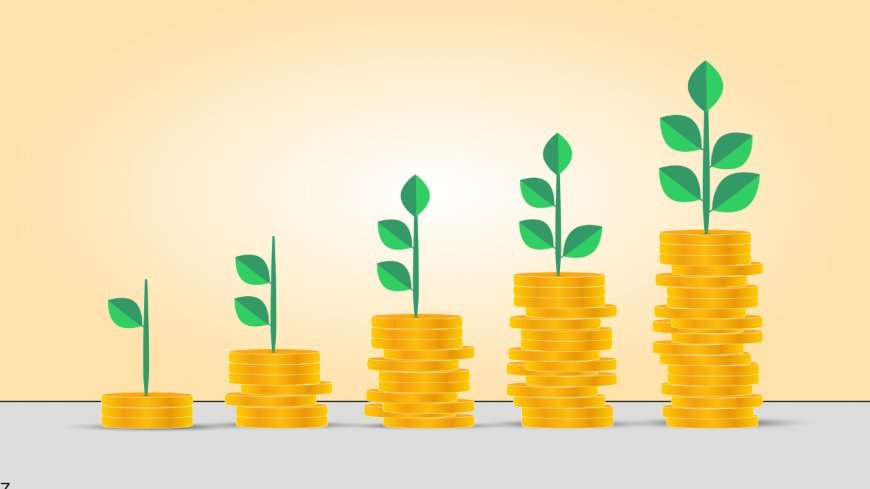
If your savings are sitting in a traditional bank account earning 0.01% to 0.5% APY, you're not just missing out on interest — you're actively losing purchasing power to inflation. Meanwhile, high-yield savings accounts (HYSAs) at online banks are currently offering 4.00–5.00%+ APY. On $20,000 in savings, that difference is $800–$1,000 per year in free interest you're simply not collecting.
This is one of the lowest-effort, highest-return financial moves available in 2026. Here's everything you need to know.
What Is a High-Yield Savings Account?
A high-yield savings account is exactly what it sounds like: a savings account that pays a significantly higher interest rate than the national average. They work the same way as a regular savings account — your money is liquid, FDIC-insured up to $250,000 per depositor per institution, and accessible when you need it. The primary difference is the interest rate.
The reason online banks can offer dramatically higher rates is simple: they have far lower overhead than traditional brick-and-mortar banks. No branch networks, no physical tellers, no prime real estate leases. Those savings get passed on to depositors in the form of higher APYs.
How Much Could You Actually Earn?
Let's run the numbers at different savings levels, comparing a typical traditional bank rate (0.42% APY, the current national average per FDIC data) against a competitive HYSA (4.50% APY):
- $5,000 saved: Traditional bank earns $21/year. HYSA earns $225/year. Difference: $204
- $10,000 saved: Traditional bank earns $42/year. HYSA earns $450/year. Difference: $408
- $25,000 saved: Traditional bank earns $105/year. HYSA earns $1,125/year. Difference: $1,020
- $50,000 saved: Traditional bank earns $210/year. HYSA earns $2,250/year. Difference: $2,040
For a family with $50,000 in savings, switching to a HYSA is worth over $2,000 per year in additional interest income — every year, indefinitely, for doing nothing differently except where your money sits. That's the opportunity cost of staying at a traditional bank.
What to Look for in a High-Yield Savings Account
Not all HYSAs are created equal. Here's what matters when comparing options:
APY (Annual Percentage Yield): This is the headline number. Look for the highest APY you can find, but read the fine print. Some accounts advertise a high rate that only applies to a promotional period, or only to balances above a certain threshold. The APY you care about is the one that applies to your actual balance under normal ongoing conditions.
FDIC or NCUA Insurance: Never keep savings in an account that isn't insured. FDIC insurance (for banks) and NCUA insurance (for credit unions) protect your deposits up to $250,000 per institution per ownership category. If an institution is not FDIC or NCUA insured, it's not a savings account — it's something else entirely, and the risk profile is completely different.
Minimum balance requirements: Many of the best HYSAs have no minimum balance requirement. Some require a minimum to earn the advertised rate or to avoid fees. Make sure the terms match how much you actually have to deposit.
Fees: A monthly maintenance fee of $5 on an account earning 4.5% APY on $5,000 ($225/year) wipes out most of your earnings. Look for fee-free accounts. Most competitive online HYSAs have no monthly fees.
Transfer speed: Moving money between your HYSA and checking account typically takes 1–3 business days via standard ACH transfer. Some banks offer same-day or instant transfers within their own ecosystem. Know the transfer timeline before assuming your HYSA can function as an emergency account.
Withdrawal limits: Historically, federal Regulation D limited savings accounts to 6 withdrawals per month, but this regulation was suspended in 2020 and many banks have not reinstated the limit. Check whether your target bank has its own withdrawal limits, as violating them can result in fees or account conversion.
Best High-Yield Savings Accounts to Consider in 2026
Rates change frequently, so always verify current APYs directly with the institution before opening an account. That said, consistently competitive options in 2026 include:
Marcus by Goldman Sachs: One of the most well-known HYSAs, backed by Goldman Sachs. Consistently competitive rates, no minimum balance, no fees. Very easy online interface. The main drawback: no checking account or debit card, so you're relying on external transfers for access.
Ally Bank: Long considered one of the best overall online banks. Competitive HYSA rates, excellent mobile app, buckets feature for organizing savings goals, and a checking account option for full banking. Customer service is consistently well-reviewed.
SoFi Bank: Offers a particularly high APY for members who set up direct deposit — often among the highest available. Also offers checking and investing accounts, making it a one-stop shop for some users. Bonus: SoFi has no account fees and provides a small bonus for new accounts meeting deposit thresholds.
American Express High Yield Savings: Backed by Amex's banking arm. Reliably competitive rates, no minimum balance, no fees. A strong option particularly if you already have American Express credit products.
Discover Bank: Another established player with competitive rates, no fees, and strong customer service. Offers both savings and checking, making transfers seamless.
Bread Savings (formerly Comenity Direct): Often offers rates at or near the top of the market. Less consumer brand recognition than the others, but fully FDIC-insured and consistently high-yielding.
For real-time rate comparisons, sites like Bankrate, NerdWallet, and DepositAccounts.com aggregate current rates across institutions and update them regularly.
Is It Safe to Bank with an Online Bank?
This is the most common concern people have when considering switching from a large traditional bank. The answer is yes — as long as the institution is FDIC insured.
FDIC insurance means that even if the bank fails, your deposits are protected up to $250,000 per depositor per institution ($500,000 for joint accounts). This protection applies identically to online banks and traditional banks. There is no difference in the safety of insured deposits based on whether the bank has physical branches.
Several of the institutions listed above — Marcus (Goldman Sachs), American Express, Discover — are subsidiaries of major financial institutions you've certainly heard of. Others, like Ally, are independently chartered banks with many years of operating history and billions in assets.
The question to ask is not "is it an online bank?" but "is it FDIC insured?" Look for the FDIC logo on the bank's website or verify directly at fdic.gov/bank/individual/failed/banklist.html.
How to Switch Without Disrupting Your Financial Life
Many people delay switching because they're worried about the logistics. It's simpler than it sounds.
Step 1: Open your new HYSA. Most can be opened online in 10–15 minutes. You'll need your Social Security number, a government-issued ID, and your existing bank account information for the initial deposit.
Step 2: Transfer money from your existing bank to the new HYSA. Initial transfers typically take 2–5 business days. Start with most of your savings balance, keeping what you need for day-to-day expenses in your checking account.
Step 3: Update any automatic transfers that deposit directly to your savings. If you have automatic transfers from your checking account that feed your savings, update them to target the new HYSA instead.
Step 4: Keep your old savings account open for a month or two to catch any missed transfers or charges, then close it if you no longer need it.
That's genuinely all there is to it. The entire process can be completed in an afternoon, and the ongoing benefit — hundreds or thousands of dollars per year in additional interest — is completely passive from that point forward.
Where Should You Keep Your HYSA?
A high-yield savings account is ideal for money you need to keep liquid but won't need in the immediate term. The most common use cases:
Emergency fund: This is the single best place to keep your 3–6 months of living expenses. The money earns meaningful interest, but it's fully accessible within 1–3 business days if an emergency strikes. Don't keep your emergency fund in the stock market (too volatile) or a CD (withdrawal penalties). A HYSA hits the right balance of safety, liquidity, and yield.
Short-term savings goals: Money you're saving for a vacation, car purchase, home down payment, or wedding fund in the next 1–3 years belongs in a HYSA. It earns far more than a checking account while remaining safe and accessible.
Holding cash between investments: If you're in between investment decisions — waiting for the right moment to deploy capital or working through a financial transition — a HYSA keeps your cash productive in the interim.
HYSAs vs. CDs vs. Money Market Accounts
These three options are often compared as alternatives for savings. Here's how they differ:
High-yield savings accounts: Fully liquid, variable rate (the bank can change the APY at any time), FDIC insured. Best for emergency funds and short-term savings where you need flexibility.
Certificates of deposit (CDs): Fixed rate for a fixed term (3 months to 5 years). Higher rates for longer terms. Early withdrawal incurs a penalty — typically 3–6 months of interest. Best for money you definitely won't need for the term duration.
Money market accounts (MMAs): Similar to HYSAs but sometimes come with check-writing or debit card privileges. Rates are often competitive with HYSAs but can have higher minimum balance requirements. FDIC insured (note: money market funds, which are different investment products, are not bank accounts and are not FDIC insured).
For most people's emergency funds and short-term savings, a HYSA provides the best combination of yield, flexibility, and simplicity. Consider CDs only for money you're confident you can lock away for the entire term.
One Important Warning: Rates Are Variable
High-yield savings account rates are not fixed. They move with the federal funds rate and the bank's competitive strategy. When the Federal Reserve raises rates, HYSA APYs tend to rise. When the Fed cuts rates, HYSA APYs fall — sometimes quickly.
This is a feature, not a bug, compared to locking money in a CD at a low rate. But it does mean you should periodically check whether your HYSA is still competitive. If your bank's rate drops significantly below the market, switching to a better option takes another afternoon and costs you nothing.
The Bottom Line
Switching your savings to a high-yield savings account is one of the simplest, highest-impact financial moves you can make in 2026. It requires no investment expertise, no risk, and minimal time. The only thing it requires is action.
If you have $10,000 or more sitting in a traditional savings account earning 0.01%–0.5%, you are giving away hundreds of dollars per year. Open a HYSA this week. The process takes 15 minutes, and the financial benefit begins immediately.
This article is for informational purposes only. Interest rates are subject to change. Always verify current rates directly with financial institutions and confirm FDIC insurance before opening any account. Deposits are insured up to $250,000 per depositor per FDIC-insured institution.
What's Your Reaction?
 Like
0
Like
0
 Dislike
0
Dislike
0
 Love
0
Love
0
 Funny
0
Funny
0
 Wow
0
Wow
0
 Sad
0
Sad
0
 Angry
0
Angry
0

Shula is an experienced content writer with a strong background in developing engaging and informative articles. She has written across diverse topics, including personal finance, lifestyle, food, and travel. With a clear and adaptable writing style, Shula brings value by making complex subjects accessible to a broad audience.
















Comments (0)