

Roth Conversions in 2026: When It Makes Sense and How to Run the Numbers
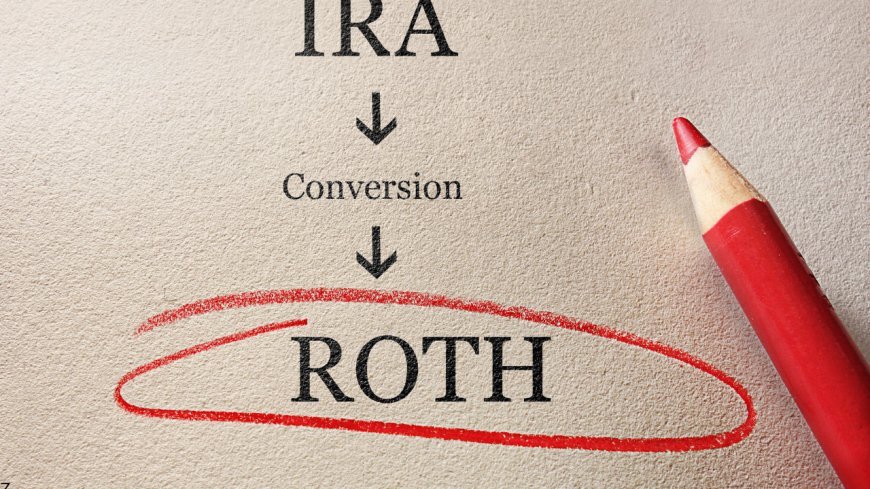
As tax season winds down and many people review their 2025 returns, now is a great time to think about Roth conversions. Converting money from a traditional IRA or 401(k) to a Roth account means paying taxes upfront, but it can lead to significant tax-free growth and withdrawals later in retirement. With 2026 tax brackets and rules in place, a well-timed conversion could save you thousands — or even tens of thousands — over the long run. The key is knowing exactly when it makes financial sense and how to calculate whether the move is worth it for your situation.
How Roth Conversions Work
A Roth conversion works by moving pretax dollars from a traditional retirement account into a Roth IRA or Roth 401(k). You pay ordinary income tax on the converted amount in the year you make the move. Once the money sits in the Roth, all future qualified withdrawals — including earnings — come out completely tax-free.
Unlike direct Roth IRA contributions, there is no income limit on conversions. This makes them especially useful for higher earners who get phased out of contributing directly to a Roth IRA in 2026. The phase-out for direct Roth IRA contributions starts at $153,000 for singles and $242,000 for married couples filing jointly.
When a Roth Conversion Makes Sense in 2026
Many people wonder whether they should convert in a year like 2026. The answer usually comes down to comparing your current tax rate with the rate you expect to pay in retirement. If you believe your tax bracket will be higher later — perhaps because of rising tax rates, large Required Minimum Distributions (RMDs), or extra income from Social Security and pensions — paying taxes now at a lower rate can be a smart strategy.
Conversions also shine during lower-income years, such as the period right after you retire but before you start collecting Social Security or taking RMDs (which generally begin at age 73 or 75 depending on your birth year). In those “gap years,” you may have more room in the lower tax brackets, letting you convert larger amounts without pushing yourself into a much higher rate.
Running the Numbers: A Simple Example
Here is a simple way to think about the math. Suppose you are married filing jointly with $80,000 in taxable income for 2026 before any conversion. The 2026 federal brackets put the 12% rate from roughly $24,801 to $100,800. That gives you around $20,000 of space in the 12% bracket after accounting for your base income.
Converting $20,000 would cost you about $2,400 in federal taxes (plus any state taxes). After the conversion, that $20,000 — plus all future growth — can be withdrawn tax-free in retirement. If you expect to be in the 22% or 24% bracket later, you come out ahead. The longer the money stays invested, the more powerful the compounding benefit becomes because you avoid taxes on decades of growth.
To run the numbers properly, start by estimating your taxable income for the rest of 2026 without any conversion. Then decide how much room you have before you hit the next tax bracket. Add the conversion amount and recalculate your total tax bill for the year. Compare that to what you would pay if you left the money in a traditional account and withdrew it later at your expected future rate.
How to Pay the Conversion Tax
Do not forget to factor in how you will pay the conversion tax itself. Using money from outside the IRA (such as from a taxable brokerage account or savings) is usually better because it lets the full converted amount continue growing tax-free. Paying the tax by withdrawing from the IRA reduces the amount going into the Roth and slows down your break-even timeline.
Important Rules to Consider
Another important consideration is the five-year rule. Each conversion starts its own five-year clock for penalty-free access to earnings (though you can always withdraw your original converted principal tax- and penalty-free at any time). If you think you might need the money relatively soon, a conversion might not be ideal. On the flip side, if you have a long time horizon and want to leave tax-free money to heirs, Roth conversions become even more attractive because beneficiaries inherit Roth accounts tax-free as well.
Roth conversions do not make sense for everyone. If you are already in a high bracket this year and expect to stay in a similar or lower one during retirement, it may be better to leave the money pretax and enjoy the tax deduction you got when you originally contributed. Conversions can also affect Medicare premiums through IRMAA surcharges if they push your modified adjusted gross income too high in a given year.
Smart Strategies for 2026
For some retirees, spreading conversions over several years helps manage these side effects. The best approach is often a deliberate, year-by-year plan rather than converting everything at once. Many people aim to fill up the 12% or even part of the 22% bracket each year during their lower-income window. This strategy keeps your current tax hit manageable while steadily shifting assets into tax-free territory before RMDs force larger taxable withdrawals.
If you have both traditional and Roth accounts, or if you are still working and contributing to a 401(k), talk with your tax advisor or use a retirement projection tool to model different scenarios. Small conversions today can compound into meaningful savings over 15 or 20 years.
Final Takeaways
Bottom line, Roth conversions in 2026 deserve a close look if your current tax rate is lower than what you anticipate in retirement or if you have a temporary dip in income. Run the numbers carefully, pay the tax from outside the account when possible, and consider spreading the strategy across multiple years. Even modest conversions can reduce your lifetime tax bill and give you more flexibility in retirement.
Have you considered a Roth conversion this year, or are you still weighing the pros and cons? Share your situation in the comments or read our related guide on maximizing your 401(k) contributions in 2026 for more ways to build tax-advantaged wealth.
What's Your Reaction?
 Like
0
Like
0
 Dislike
0
Dislike
0
 Love
0
Love
0
 Funny
0
Funny
0
 Wow
0
Wow
0
 Sad
0
Sad
0
 Angry
0
Angry
0

Shula is an experienced content writer with a strong background in developing engaging and informative articles. She has written across diverse topics, including personal finance, lifestyle, food, and travel. With a clear and adaptable writing style, Shula brings value by making complex subjects accessible to a broad audience.
















Comments (0)