

















How Big Should Your Emergency Fund Be in 2026?
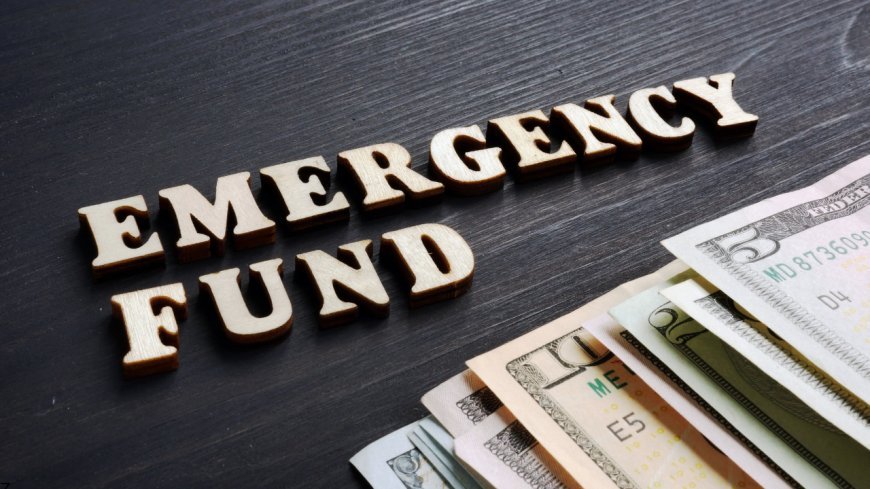
As July 2026 unfolds, you're probably taking stock of your financial safety net amid a labor market that's sending mixed signals. The classic recommendation of 3–6 months of essential expenses in an emergency fund remains a solid benchmark from experts like Fidelity, NerdWallet, and Bankrate. But recent data on hiring, growth, and interest rates is worth factoring in before you decide whether that range is still right for you — or whether a bigger cushion makes more sense given where things stand.
Unemployment eased slightly to 4.2% in June 2026, but that dip came with a catch: hiring slowed sharply and fewer people were actively in the labor force. Meanwhile, the economy grew at a healthier-than-expected 2.1% annualized pace in the first quarter. The Federal Reserve has held its benchmark rate steady at 3.50%–3.75% through four straight meetings this year, which is good news if you're parking cash in a savings account. Here's how to think through your target and where to put the money.
The Current Economic Backdrop and Job Market Vibes
Your read on "how much is enough" should start with what's actually happening in the labor market. Nonfarm payrolls rose by just 57,000 in June 2026, a sharp slowdown after stronger reports earlier in the year, and the prior two months were revised down by a combined 74,000 jobs. The unemployment rate actually fell to 4.2% from 4.3% — but not because more people found work. It dropped mainly because the labor force shrank, with participation falling to 61.5%, its lowest level since March 2021.
That combination — fewer new jobs, but people also leaving the workforce rather than being counted as unemployed — points to a "low-hire, low-fire" environment. Employers aren't laying off in large numbers, but they're also not adding headcount quickly. If you work in a cyclical or AI-exposed field, or you're a single income for your household, a longer job search than you'd expect is a real possibility.
On the growth side, the picture is more reassuring. Real GDP grew at a final 2.1% annualized rate in the first quarter of 2026, up from a sluggish 0.5% in the last quarter of 2025, helped along by a rebound in government spending and a surge in business investment tied to AI. That said, economists note the growth has been narrower than it looks: consumer spending has been propped up partly by drawn-down savings and increased credit use, and housing activity has now declined for five straight quarters. Forecasters generally expect growth to moderate to somewhere near 1.9%–2% for the rest of 2026.
Is 3–6 Months Still the Right Target? Personalize Your Number
The 3–6 month rule isn't obsolete — it's still the standard guidance for most people, covering essentials like housing, food, utilities, transportation, and minimum debt payments if you lose your income. The gap between what people say they want saved and what they actually have saved tends to be wide, so if you're behind, you're in good company — the goal is to start closing that gap, not to hit perfection overnight.
To personalize your target, calculate your monthly essential expenses (leave out discretionary spending like dining out or subscriptions), then multiply by your ideal coverage window:
- 3 months suits stable dual-income households, government or essential workers, or those with strong professional networks and reliable unemployment benefits in their state.
- 6 months fits single-income households, families with dependents, workers in volatile or AI-exposed industries, or anyone in a high-cost area.
- Beyond 6 months (9–12+) may make sense if you're near retirement, managing a health condition, self-employed, or working in a field where the current low-hire environment could mean a longer-than-usual job search.
Factor in your specifics: Do you have dependents? A side income? Access to a low-interest credit line or severance package? Use a simple formula — monthly essentials × coverage months = target. For example, if your essentials run $4,000/month, you're looking at a target of $12,000–$24,000. Given the current slowdown in hiring, it's reasonable to lean toward the higher end of your range, or add a buffer if your industry has seen layoffs recently.
Where to Park Your Emergency Fund: HYSA vs. Money Market Accounts
Keep your emergency fund liquid, safe, and earning a real return — FDIC-insured up to $250,000 per institution, per depositor. With the Fed holding steady at 3.50%–3.75% since early 2026, savings yields have stayed elevated even as some banks have trimmed rates slightly in recent weeks.
High-yield savings accounts (HYSAs) remain the simplest option for a true emergency fund: easy online transfers, no transaction limits in most cases, and top advertised rates currently reaching up to roughly 4.50%–5.00% APY at smaller online banks and credit unions, with well-known, easy-to-open options like Newtek Bank around 4.20% APY and Climate First Bank around 4.01% APY. If you want simplicity and speed of access without checks or a debit card, an HYSA is usually your best bet.
Money market accounts (MMAs) offer similar liquidity with the added convenience of check-writing or debit card access on many accounts, though yields are often a touch lower than the top HYSAs — competitive options are commonly in the high-3% to low-4% APY range, with tiered accounts like CIT Bank's Platinum Savings paying more once you clear a $5,000 balance.
A few things worth keeping in mind before you pick a bank:
- Rates are variable and can move at any time, so check current numbers on Bankrate or NerdWallet before opening an account rather than relying on any specific rate you've seen advertised.
- Some of the very highest-yield accounts come from smaller or newer institutions — verify FDIC or NCUA insurance and watch for balance caps, direct-deposit requirements, or promotional rates that expire after a set period.
- Skip CDs for your true emergency fund. Locking up cash for a fixed term defeats the purpose of an emergency fund, even when CD rates look attractive.
Splitting your fund is also an option — keep your core cushion in a top HYSA for immediate access, with any overflow in an MMA if you want occasional check-writing ability.
Rebuilding After a Slow Hiring Market or Unexpected Costs
If your fund took a hit from a rough job search, a health expense, or just life catching up with your budget, rebuilding works best in small, consistent steps. Automate a transfer — even $50–$200 per pay period — so it happens without you having to think about it. Route windfalls like a tax refund or bonus straight into the account to accelerate progress.
If you're starting from zero, aim for a starter goal of $1,000 to cover minor emergencies before scaling toward your full 3–6 month target. Cutting one non-essential expense, like an unused subscription, and redirecting it to savings can make a bigger dent than it seems over a few months.
The Bottom Line
The 3–6 month emergency fund guideline still holds in 2026, but the current environment — a cooling but not collapsing labor market, moderate GDP growth, and a Fed holding rates steady — is a good prompt to double-check that your number matches your real risk. If your industry has seen hiring slow or you're the sole income for your household, leaning toward the higher end of the range (or beyond) adds real resilience.
Park your fund in a top HYSA (up to roughly 4.50%–5.00% APY) or a solid MMA (roughly 3.5%–4.10% APY) so it's both safe and working for you. Run your numbers this month, set a realistic target, and automate your contributions — even modest, steady progress builds real security against whatever comes next.
This article is for educational purposes only and does not constitute financial advice. Rates and figures cited are current as of July 2026 and subject to change; verify current rates directly with financial institutions before opening an account.
What's Your Reaction?
 Like
0
Like
0
 Dislike
0
Dislike
0
 Love
0
Love
0
 Funny
0
Funny
0
 Angry
0
Angry
0
 Sad
0
Sad
0
 Wow
0
Wow
0