

401(k) vs IRA: Which Should You Prioritize With Every Paycheck?
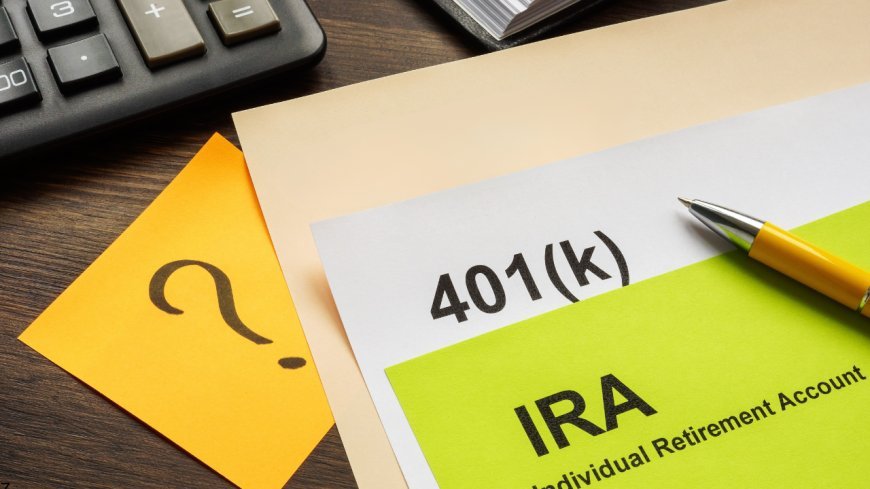
If you're putting money away for retirement, you've almost certainly run into the 401(k) vs. IRA question. Should you max one out before touching the other? Does it matter? And what happens if you can't do both?
The short answer: it depends on whether your employer offers a match. But there's a clear order of operations that most people get wrong — and getting it right could mean tens of thousands of extra dollars by the time you retire.
Let's break it down.
What's the Actual Difference?
A 401(k) is a retirement account you open through your employer. You contribute pre-tax money, it grows tax-deferred, and you pay taxes when you withdraw in retirement. Many employers also match a portion of what you put in — essentially free money added to your account.
An IRA (Individual Retirement Account) is one you open yourself, through a broker like Fidelity, Schwab, or Vanguard. You have two main types: a Traditional IRA (pre-tax contributions, taxed on withdrawal) and a Roth IRA (after-tax contributions, tax-free withdrawal in retirement).
Both are powerful tools. The key differences come down to contribution limits, investment options, and — most importantly — whether you have an employer match.
2026 Contribution Limits
For 2026, the IRS allows:
• 401(k): $23,500 per year ($31,000 if you're 50 or older)
• IRA: $7,000 per year ($8,000 if you're 50 or older)
That's a significant gap. If you could only fund one account fully, the 401(k) lets you shelter more than three times as much income from taxes each year.
The 'Match First' Rule — Always
Here's the single most important principle in this debate: if your employer offers a 401(k) match, contribute at least enough to get the full match before you put a dollar anywhere else.
A 50% match on the first 6% of your salary is a guaranteed 50% return on that money — before any market gains. No investment reliably beats that.
Example: You earn $70,000. Your employer matches 50% of contributions up to 6% of salary. That means contributing $4,200 gets you $2,100 from your employer, for a total of $6,300 — from a $4,200 out-of-pocket investment. That's a 50% instant return.
Leaving that match on the table is one of the most expensive financial mistakes you can make.
After the Match: Why an IRA Often Wins
Once you've captured your full employer match, the next best move for most people is to max out a Roth IRA — before going back to put more into your 401(k).
Why? Because 401(k) plans often have limited investment options and higher fees than what you'd find in a self-directed IRA. A Roth IRA also gives you more flexibility: you can withdraw your contributions (not earnings) at any time without penalty, which makes it a useful secondary emergency fund.
The exception: if you're in a high tax bracket now and expect to be in a lower one in retirement, a Traditional IRA or simply maxing your pre-tax 401(k) may be the better tax move. If that's you, it's worth a conversation with a financial advisor.
The Order of Operations
Here's the framework to follow with every paycheck:
1. Contribute to your 401(k) up to the full employer match
2. Max out a Roth IRA ($7,000/year, or $583/month)
3. Go back to your 401(k) and increase contributions toward the $23,500 limit
4. If you've maxed both, consider a taxable brokerage account or HSA
This sequence isn't right for every single situation — but it's the right starting point for the vast majority of salaried workers.
Roth 401(k) vs. Traditional 401(k)
Many employers now offer a Roth 401(k) option, which combines the higher contribution limits of a 401(k) with the tax-free growth of a Roth IRA. If your employer offers it and you're in a low-to-moderate tax bracket, the Roth 401(k) can be worth choosing over the traditional version.
General guidance: if you expect your tax rate to be higher in retirement than it is today, go Roth. If you expect it to be lower, go traditional. If you genuinely don't know — and most people don't — splitting contributions between both can be a reasonable hedge.
What If You Can Only Do One?
If money is tight and you can only fund one account:
• If your employer offers a match: contribute enough to get the full match from your 401(k), and stop there until you can afford more.
• If there's no employer match: a Roth IRA is usually the better choice — more investment options, more flexibility, and tax-free growth.
• If your income is above the Roth IRA limit ($161,000 single / $240,000 married in 2026): stick with the Traditional IRA or 401(k).
The Bottom Line
The 401(k) vs. IRA question isn't about which account is better — both are essential tools for building long-term wealth. It's about sequencing. Capture the match first, then fill your IRA, then go back to the 401(k). Follow that order consistently and you're already ahead of most people.
Ready to get started? Opening a brokerage account takes about 10 minutes. Fidelity and Schwab both offer IRA accounts with no minimums and commission-free investing.
What's Your Reaction?
 Like
0
Like
0
 Dislike
0
Dislike
0
 Love
0
Love
0
 Funny
0
Funny
0
 Wow
0
Wow
0
 Sad
0
Sad
0
 Angry
0
Angry
0

James Johnson has 10+ years in fintech. He holds an MBA and an MS in Information Technology, and writes about how AI and personal finance actually meet for everyday investors.
















Comments (0)