

How Much House Can You Really Afford? A Practical Guide for 2026

When buyers ask, “How much house can I afford?” they often expect a single number. In reality, affordability is a range shaped by your income, debt, savings, loan terms, local taxes, insurance costs, and lifestyle.
A lender can estimate how much you may qualify to borrow, but only you can decide how much you can comfortably repay while still meeting your other goals. This practical framework can help you establish a home-buying budget before emotion or competition pushes you too far.
Start With the Full Monthly Housing Payment
Online mortgage calculators often highlight principal and interest. Those are important, but they are not the entire housing payment. A realistic estimate should include:
- Mortgage principal and interest
- Property taxes
- Homeowners insurance
- Private mortgage insurance or other mortgage insurance, if applicable
- Homeowners association or condominium fees
- Flood insurance or other property-specific coverage when required
These costs can make two similarly priced homes feel very different financially. A property in an area with higher taxes, insurance premiums, or association fees may cost significantly more each month.
Do Not Confuse Qualification With Affordability
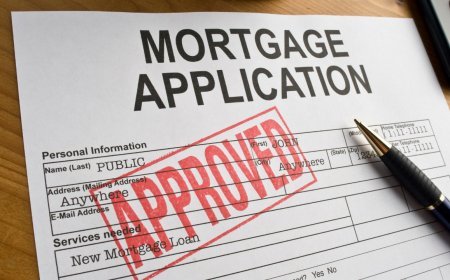
Lenders evaluate your income, debts, assets, credit, loan structure, and the property. Their approval process is designed to determine whether a loan meets underwriting requirements. It does not capture every priority in your household budget.
A lender may not know that you pay for childcare, regularly support relatives, plan to return to school, expect a vehicle replacement, or want to keep saving aggressively for retirement. That is why the maximum amount on a preapproval should be treated as a ceiling, not a target.
Calculate Your Debt-to-Income Ratio—but Know Its Limits
Your debt-to-income ratio, or DTI, compares recurring monthly debt obligations with gross monthly income. Lenders may include the proposed housing payment along with obligations such as car loans, student loans, credit cards, and personal loans.
DTI can help you understand how debt affects mortgage qualification, but it should not be your only affordability test. Because it usually uses income before taxes and does not count every living expense, a payment that fits an underwriting ratio can still feel tight after taxes, health insurance, groceries, utilities, transportation, and savings.
Better approach: Review both your lender-facing DTI and your household’s real cash flow using take-home pay.
Build a Real-Life Monthly Budget
Review several months of actual spending rather than relying on an idealized budget. Include recurring bills and irregular expenses that are easy to overlook:
- Food, transportation, healthcare, and childcare
- Phone, internet, subscriptions, and utilities
- Insurance premiums not included in payroll deductions
- Travel, gifts, school costs, and family support
- Retirement contributions and other savings goals
- Annual or seasonal expenses divided into monthly amounts
Subtract these expenses and your desired savings from take-home income. The remaining amount provides a more realistic picture of what housing payment your household can sustain.
Estimate Maintenance and Repairs
Renters can often call a landlord when an appliance fails or the roof leaks. Homeowners generally pay for those problems themselves. The cost will not arrive as a neat monthly bill, but it still belongs in the budget.
The appropriate maintenance reserve depends on the home’s age, size, construction, climate, and condition. Review the inspection report and identify major systems such as the roof, heating and cooling equipment, plumbing, electrical service, foundation, windows, and appliances. A house with several aging systems needs a larger near-term cushion.
Account for Cash Needed Before and After Closing
Affordability is not only about the monthly payment. Buyers may need cash for the down payment, closing costs, moving expenses, initial repairs, furnishings, and utility deposits. Some properties also require immediate purchases such as appliances, lawn equipment, or safety upgrades.
A large down payment can reduce the amount borrowed, but using nearly all your savings can create a different risk. If a repair or income disruption occurs soon after closing, a homeowner with no reserves may turn to expensive debt.
Better approach: Compare down payment options while protecting a separate post-closing emergency fund.
Stress-Test the Budget
Before setting your final price range, ask how the budget would respond to realistic changes:
- What if property taxes or insurance rise?
- What if one income temporarily decreases?
- What if the home needs a major repair?
- What if a car must be replaced?
- Can you still contribute toward retirement and other goals?
If a modest setback would immediately force you to use credit cards, the planned payment may be too aggressive.
Compare Homes by Monthly Cost, Not Listing Price Alone
When reviewing properties, create a simple comparison sheet. Record the price, estimated loan amount, principal and interest, taxes, insurance, mortgage insurance, HOA fees, utilities, commute costs, and expected repairs.
This makes tradeoffs visible. A less expensive home that needs substantial work may be costlier than a move-in-ready property. A home farther away may have lower taxes but higher transportation costs. The best value is the one that fits the full financial picture.
A Practical Affordability Process
- Review your credit and current monthly debts.
- Calculate average take-home income and actual household spending.
- Choose a comfortable all-in monthly housing payment.
- Estimate taxes, insurance, mortgage insurance, and HOA fees.
- Protect cash for closing, moving, emergencies, and repairs.
- Test the budget against income changes and major expenses.
- Use the result to set a maximum home price before touring.
- Compare multiple mortgage offers using equivalent assumptions.
The Bottom Line
The right home price is not the largest amount a lender will approve. It is the amount that allows you to make the payment, maintain the property, handle surprises, and continue living the rest of your financial life.
Set your budget before you fall in love with a home. Focus on the complete monthly cost, preserve savings, and leave room for change. Buying below your maximum can provide something valuable that a larger house cannot: financial breathing room.
This article provides general educational information and is not individualized financial, legal, tax, or real estate advice. Mortgage requirements and costs vary by borrower, lender, loan program, property, and location.
Frequently Asked Questions
What's Your Reaction?
 Like
0
Like
0
 Dislike
0
Dislike
0
 Love
0
Love
0
 Funny
0
Funny
0
 Wow
0
Wow
0
 Sad
0
Sad
0
 Angry
0
Angry
0

Shula is an experienced content writer with a strong background in developing engaging and informative articles. She has written across diverse topics, including personal finance, lifestyle, food, and travel. With a clear and adaptable writing style, Shula brings value by making complex subjects accessible to a broad audience.














Comments (0)