

Roth Conversions Before RMDs: How the Strategy Works—and When It Can Backfire

The years after work ends but before required minimum distributions begin can create a rare planning window. Earned income has stopped, Social Security may not have started, and a retiree may temporarily occupy a lower tax bracket. A Roth conversion can deliberately fill part of that bracket now to reduce tax-deferred balances later. The strategy can be powerful, but a conversion that ignores Medicare, cash flow, and market risk can become too expensive.
What a Roth conversion actually does
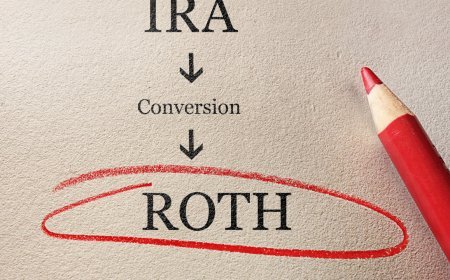
A conversion moves eligible money from a traditional IRA or other pre-tax retirement account into a Roth IRA. Any untaxed amount converted is generally included in ordinary income for that calendar year. You pay tax now; in exchange, qualified Roth withdrawals can be tax-free, and the original Roth IRA owner is not required to take lifetime RMDs.
This is not an all-or-nothing decision. Partial conversions let you choose an amount that fits a targeted federal bracket, state-tax situation, or Medicare threshold.
Why the pre-RMD window can be valuable
Once RMDs start, mandatory withdrawals can stack on Social Security, pensions, dividends, and other income. Larger taxable income can raise marginal rates, cause more Social Security to be taxable, and increase Medicare premiums. Converting earlier shrinks the balance later subject to RMD calculations.
The strategy can also improve tax diversification. A retiree with taxable, traditional, and Roth money has more control over where each year's spending comes from. That flexibility matters during a market decline, major purchase, or unusually high-expense year.
A simple way to size a conversion
Begin with projected taxable income before conversion: pensions, wages, interest, dividends, realized gains, and taxable Social Security. Estimate taxable income after deductions. The difference between that number and a chosen bracket ceiling offers a rough conversion range.
Do not stop at the federal bracket. Add state income tax, capital-gains interactions, Affordable Care Act subsidy effects before Medicare, and IRMAA after Medicare begins. Leave room for uncertain year-end income rather than converting exactly to a threshold.
When Roth conversions can backfire
- The tax rate is not actually lower. A large conversion can spill into a higher bracket.
- Medicare costs rise. Conversion income can trigger IRMAA two years later.
- Taxes are paid from the IRA. Less remains invested, and someone under 59½ may face an early-distribution penalty on money withheld for tax.
- A move to a lower-tax state is near. Converting before the move may create avoidable state tax.
- Charitable plans favor traditional dollars. Qualified charitable distributions can be an efficient later use of IRA assets.
- The conversion cannot be undone. Current rules generally prohibit recharacterizing a conversion back to traditional status.
What changes after RMDs begin?
Conversions are still possible, but the year's RMD generally must be withdrawn first. An RMD is not eligible for rollover or conversion. Only additional eligible dollars can move to the Roth, so the mandatory distribution may consume part of the tax bracket you hoped to use.
Market timing without predicting the market
A market decline can allow the same number of shares to be converted at a lower taxable value. If they recover inside the Roth, the rebound may occur in the tax-free account. But prices can fall further, and tax is based on the conversion value when completed. A series of smaller conversions can reduce pressure to choose one perfect date.
A disciplined annual process
- Project income through the first several RMD years.
- Choose a target bracket or total tax-cost limit.
- Estimate IRMAA and other income-based effects.
- Confirm cash outside the IRA can pay the tax.
- Convert in stages and recheck late in the year.
- Document IRA basis on Form 8606 when after-tax contributions exist.
The bottom line: the best Roth conversion is rarely the largest possible conversion. It is the amount that improves lifetime after-tax income while preserving flexibility for Medicare, charitable giving, and future tax-law changes.
Frequently Asked Questions
What's Your Reaction?
 Like
0
Like
0
 Dislike
0
Dislike
0
 Love
0
Love
0
 Funny
0
Funny
0
 Wow
0
Wow
0
 Sad
0
Sad
0
 Angry
0
Angry
0

Finance Mastering delivers practical insights on personal finance, budgeting, investing, and money management. Whether you're just starting out or looking to grow your wealth, we make financial freedom achievable.












Comments (0)