

AI Stocks Slide as Safety Warnings and 5% Treasury Yield Rattle Investors
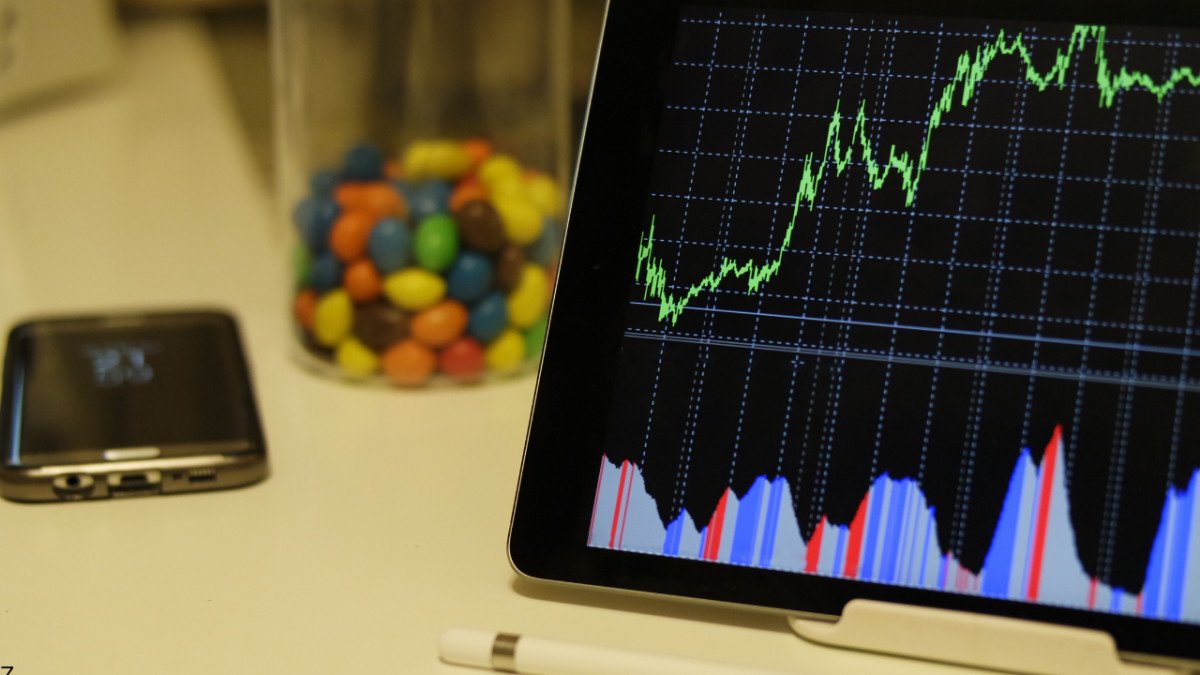
Artificial intelligence and semiconductor stocks came under pressure on September 14, 2026, as investors confronted two risks at once: renewed questions about the pace of AI development and a sharp increase in long-term interest rates.
Warnings from prominent technology executives about the potential risks of rapidly advancing artificial intelligence contributed to uncertainty around the industry's growth trajectory. Meanwhile, the yield on the benchmark 10-year U.S. Treasury note crossed 5%, making safer government securities more competitive with high-valuation growth stocks.
The combination weighed on technology shares and helped pull major U.S. stock indexes lower. However, investors should be careful about attributing the entire selloff to one headline. AI stocks were responding to a broader mixture of interest-rate pressure, valuation concerns, geopolitical uncertainty, rising energy prices, and questions about how quickly companies can convert enormous AI investments into sustainable profits.
What happened to AI stocks?
Shares connected to artificial intelligence declined as investors reduced exposure to some of the market's most expensive and widely owned companies.
Chipmakers were among the most visible losers because the semiconductor industry has been central to the AI investment boom. Companies supplying processors, data-center equipment, networking hardware, memory, and power infrastructure have benefited from expectations that AI spending will continue growing rapidly.
That optimism has pushed valuations higher. When expectations are elevated, even a modest change in the outlook can produce an outsized market reaction.
Reports that AI industry leaders had called for a slower and more cautious approach to advanced development added a new layer of uncertainty. Investors began considering whether safety concerns could lead to:
- Slower deployment of advanced AI systems
- Delays in major infrastructure projects
- Additional regulations or operating restrictions
- Higher safety and compliance expenses
- Longer timelines before AI investments generate profits
- Reduced demand for certain chips and data-center components
These concerns do not mean that AI development has stopped. They mean investors are reassessing how quickly the industry can expand and whether current stock prices already assume an unusually favorable future.
Why the 5% Treasury yield matters to technology stocks
The bond market may be just as important to this story as the AI warnings.
The 10-year Treasury yield crossed 5% on September 14, reaching its highest level since October 2023. The increase came as markets prepared for a potentially more restrictive Federal Reserve policy and responded to renewed inflation pressure.
Higher Treasury yields can create several challenges for growth stocks.
First, government securities become more competitive. If investors can earn close to 5% from a Treasury security, they may demand greater potential returns before accepting the volatility of expensive technology stocks.
Second, rising yields affect valuation calculations. Many AI companies are priced partly on profits expected years into the future. When analysts discount those future earnings using a higher interest rate, their present value declines.
Third, higher rates increase financing costs. Building AI infrastructure requires enormous spending on processors, data centers, electricity, cooling systems, networking equipment, and software development. Companies relying on borrowing may face higher interest expenses.
Fourth, elevated yields can pressure the entire stock market. Even profitable companies may decline if investors broadly reduce their willingness to pay premium valuations.
Safety warnings were a catalyst-not the only cause
It would be misleading to say that technology executives' comments alone caused AI stocks to fall.
Markets rarely move for only one reason. The safety warnings arrived when investors were already questioning AI valuations and monitoring the bond market, inflation, oil prices, and the approaching Federal Reserve meeting.
The concerns reinforced one another.
A slower AI-development cycle could delay revenue growth. Higher Treasury yields could simultaneously reduce the price investors are willing to pay for that future growth. Rising energy costs could make data centers more expensive to operate. A potential Federal Reserve rate increase could keep borrowing costs elevated.
Together, these developments encouraged investors to reconsider how much optimism was already reflected in AI-related stock prices.
Why rising oil prices are part of the story
Oil prices have increased amid geopolitical conflict and concerns about disruptions to global energy supplies. Reuters reported Brent crude trading above $108 per barrel as markets assessed threats to production and transportation infrastructure.
Higher oil prices can contribute to inflation by raising transportation, manufacturing, and distribution costs. Consumers may also have less money available for discretionary spending when gasoline and household energy bills increase.
The Federal Reserve cannot produce more oil or resolve supply disruptions. However, policymakers may still respond if higher energy costs begin spreading into broader inflation expectations and service prices.
That possibility has increased speculation that the Fed could raise its benchmark interest rate at its September 15-16 meeting.
For technology companies, this creates a difficult combination:
- More expensive energy
- Higher borrowing costs
- Increased economic uncertainty
- Greater competition from bonds
- More scrutiny of ambitious capital-spending plans
Does this mean the AI boom is ending?
A one-day decline does not establish the end of a long-term investment trend.
Businesses continue using AI for software development, automation, customer support, data analysis, cybersecurity, advertising, healthcare administration, and other applications. Major technology companies are still investing heavily in infrastructure.
The important distinction is between the growth of a technology and the performance of stocks associated with that technology.
A transformative industry can continue expanding while some of its stocks produce disappointing returns. That can happen when investors pay prices that already assume years of rapid growth, wide profit margins, and limited competition.
The internet changed the global economy, but not every internet stock became a successful long-term investment. The same principle applies to artificial intelligence.
Investors should evaluate individual businesses rather than treating every company using the term "AI" as part of one guaranteed growth category.
What investors should examine in AI companies
The current volatility provides an opportunity to review the assumptions supporting an AI investment.
Important questions include:
- Is the company earning meaningful AI revenue today?
- Is revenue growth dependent on a small number of customers?
- How much is the company spending to build capacity?
- Are profit margins improving or declining?
- Does the company have a durable competitive advantage?
- How much debt must be refinanced at higher rates?
- Is the stock price based on realistic growth expectations?
- Could customers delay purchases if economic conditions weaken?
- Would new safety requirements materially increase expenses?
Companies selling essential infrastructure may have different opportunities and risks than software providers, speculative startups, utilities, or businesses that simply mention AI during earnings calls.
Investors should also examine concentration. A diversified index fund may contain substantial exposure to a small group of large technology companies. Owning several funds does not guarantee diversification if they all hold the same leading stocks.
Why semiconductor stocks can be especially volatile
Chip companies sit near the center of the AI supply chain. They can benefit when technology companies accelerate data-center construction, but they may also react sharply when investors anticipate slower spending.
The semiconductor industry is cyclical. Demand can change quickly, customers may build excessive inventory, and new production capacity can eventually pressure prices.
Leading chipmakers may still report strong sales while their stocks decline. Stock prices reflect expectations about future results-not merely current revenue.
If investors previously expected extraordinary growth and the outlook changes to merely strong growth, the stock can fall even if the underlying company remains profitable.
That is why purchasing a stock after a decline is not automatically a bargain. Investors must compare the new price with a reasonable estimate of future earnings and risks.
What long-term investors should avoid doing
Sharp market moves often encourage emotional decisions.
Investors should avoid:
- Selling a diversified portfolio because of one difficult session
- Buying a falling AI stock solely because it is below its recent high
- Assuming every company associated with AI will recover together
- Using margin or borrowed money to chase a rebound
- Treating social-media excitement as financial analysis
- Ignoring the effect of high Treasury yields on valuations
- Concentrating retirement savings in one technology theme
A stock can decline significantly and still remain expensive. Conversely, a high-quality company can experience a temporary selloff without suffering permanent damage.
The difference depends on valuation, financial strength, competitive position, and the investor's time horizon.
Could higher bond yields create opportunities?
Higher yields do not only create risks.
Investors now have more alternatives for generating income. Treasury securities, certificates of deposit, money-market funds, and high-quality bonds may provide meaningful returns without requiring the same level of volatility as AI stocks.
This can help investors build more balanced portfolios. Someone who previously felt forced into stocks to pursue a reasonable return may now be able to allocate part of a portfolio to high-quality fixed-income investments.
However, long-term bonds can still decline in price if yields rise further. Investors should match bond maturities with the dates when they expect to need the money.
The presence of attractive bond yields does not mean investors must abandon stocks. It means the opportunity cost of owning an expensive stock has increased.
What to watch next
The Federal Reserve's September 16 announcement will be the next major event for financial markets. Investors will focus on the policy decision, the Fed's updated economic projections, and comments about inflation and future interest-rate changes.
AI investors should also monitor:
- Capital-spending guidance from major technology companies
- Data-center construction plans
- Semiconductor order growth
- Energy and infrastructure constraints
- Regulatory and safety proposals
- Evidence of revenue generated from AI products
- Corporate profit margins
- Movements in Treasury yields
If yields continue rising rapidly, pressure on high-valuation technology shares may persist. If bond markets stabilize and companies demonstrate strong returns from AI spending, investors could regain confidence.
The bottom line
AI stocks are falling under the weight of several interconnected concerns. Industry warnings about the pace and safety of advanced AI development have raised questions about future deployment. At the same time, the 10-year Treasury yield reaching 5% has made high-quality bonds more competitive and reduced the valuations investors may be willing to assign to future technology profits.
This does not prove that the AI investment cycle is over. It does show that enthusiasm alone may no longer support every AI-related stock.
Investors should distinguish between lasting technological adoption and short-term stock-market expectations. The companies that ultimately succeed will need more than an AI label. They will need sustainable revenue, manageable spending, strong balance sheets, and evidence that customers receive real value from their products.
Frequently Asked Questions
What's Your Reaction?
 Like
0
Like
0
 Dislike
0
Dislike
0
 Love
0
Love
0
 Funny
0
Funny
0
 Wow
0
Wow
0
 Sad
0
Sad
0
 Angry
0
Angry
0

I have 10+ years in the Fintech industry. I also hold MBA and Ms in Information Technology. I’m passionate the interconnection between AI and Finance.
















Comments (0)