

Bond Ladders vs. Target-Date Funds: Two Paths to Managing Interest-Rate and Timeline Risk

Two popular answers to the same planning question
Investors who want less equity risk as a goal date approaches often ask: Should I build a bond ladder, or should I use a target-date fund (TDF) and let the glide path do the work?
Both approaches can be reasonable. They solve related problems with different machinery. A bond ladder emphasizes scheduled cash flows from individual bonds (or CDs) maturing over time. A target-date fund packages a diversified mix of stocks and bonds that generally becomes more conservative as the stated year nears. Understanding the tradeoffs helps you choose a tool that matches your timeline, attention budget, and need for predictability.
This is educational comparison—not a recommendation to buy any specific fund or bond.
What a bond ladder is
A bond ladder is a portfolio of bonds (or similar fixed-income instruments) with staggered maturity dates—for example, bonds maturing each year for the next 5, 7, or 10 years. As each rung matures, you receive principal that you can spend or reinvest into a new longer rung at then-current yields.
Core features:
- Known maturity values (for high-quality bonds held to maturity, ignoring default risk).
- Staggered liquidity instead of one big maturity cliff.
- Reinvestment decisions at each maturity.
- Interest-rate sensitivity that depends on the ladder’s average duration and how you rebuild rungs.
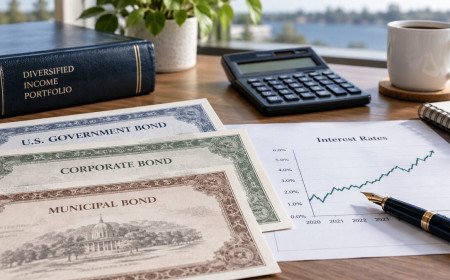
Ladders are often built with Treasuries, investment-grade corporate bonds, municipal bonds (for taxable accounts in higher brackets), or certificates of deposit. Credit quality and call features change the reliability of the “known cash flow” story.
What a target-date fund is
A target-date fund is a diversified fund (often a fund-of-funds) labeled with a year—such as 2040 or 2055. The managers follow a glide path: higher equity allocation when the date is far away, gradually shifting toward more bonds (and sometimes cash-like holdings) as the year approaches and often continuing to evolve after the date.
Core features:
- One-ticket diversification across many asset classes.
- Automatic rebalancing inside the fund.
- Professional glide-path design (which still embeds assumptions about risk).
- Ongoing equity exposure even near and after the target year in most modern “through” glide paths.
TDFs are common in workplace retirement plans because they reduce the need for do-it-yourself allocation changes. They are pooled vehicles; you own shares of a fund, not a schedule of individual bond maturities.
The problems each tool is best at naming
Bond ladders shine when you care about scheduled cash
If you know you need roughly $X per year for tuition, a home down payment window, or early retirement spending, a ladder can map maturities to those needs. Holding individual high-quality bonds to maturity can make principal repayment feel more predictable than the daily price of a bond fund, which marks to market.
Important nuance: predictability of maturity cash flow is not the same as immunity from opportunity cost. If rates rise after you buy, your locked-in yields may look low versus new bonds. If rates fall, reinvestment of maturing rungs may occur at lower yields.
Target-date funds shine when you want a full portfolio on autopilot
A TDF is usually not “just bonds.” It is an entire multi-asset portfolio with a declining equity weight over time. That helps investors who would otherwise leave a 401(k) in cash, chase hot stocks, or forget to rebalance.
If your real need is disciplined lifelong allocation—not a custom cash-flow calendara TDF’s simplicity can outweigh the appeal of hand-building fixed-income rungs.
Interest-rate risk: where intuition goes sideways
Bond funds and rising rates. When yields rise, existing bond prices fall. A bond mutual fund or ETF will show a price decline even if it holds high-quality securities. Duration estimates how sensitive prices are.
Individual bonds held to maturity. If you buy a high-quality bond and hold it to maturity, interim price swings matter less for the cash you planned to receive at maturity (again, ignoring default). You still face reinvestment risk on coupons and on principal when the bond matures.
Ladders and rate moves. A ladder spreads reinvestment over time, which can average the rates you lock in. It does not guarantee a high lifetime yield. Short ladders reset faster when rates change; long ladders lock yields longer but carry more price volatility if you must sell early.
TDFs and rate moves. A TDF’s bond sleeve is typically fund-based. Rising rates can pressure the fixed-income portion while equities may move independently. The glide path still holds stocks, so overall volatility is usually higher than a pure bond ladder with the same dollar amount.
Credit risk and complexity
A Treasury ladder emphasizes interest-rate and reinvestment risk over credit risk. Corporate or municipal ladders add default and (for munis) tax-policy complexity. Callable bonds can be redeemed early when it suits the issuer—often when rates fall—disrupting your ladder schedule.
TDFs push credit and rate decisions into the fund’s bond managers and index providers. You trade customization for oversight and scale. You also inherit whatever mix of Treasuries, corporates, mortgage-backed securities, and international bonds the fund uses.
Costs and operational burden
Bond ladder costs can include bid-ask spreads on individual bonds, account fees, and your time. Building a clean ladder in small dollar amounts can be awkward; some bonds trade in increments that do not fit neat annual rungs. Treasury auctions and TreasuryDirect or brokerage platforms can simplify government ladders for motivated DIY investors.
TDF costs are the fund’s expense ratio (and any underlying fund costs already reflected in that ratio). Workplace plan menus vary widely: some TDFs are inexpensive; others are not. Because a TDF is automatic, the “labor cost is low—valuable if you would otherwise mismanage allocation.
Education point: the cheapest sticker price is not always the best fit if the tool does not match your cash-flow design. Conversely, a beautiful custom ladder that you abandon after two years is an expensive hobby.
Taxes and account location
In taxable accounts, bond interest is generally taxed as ordinary income (with nuances for Treasuries at the state level and for municipal bonds). TDFs distribute interest and dividends according to their holdings; in taxable accounts that can create annual tax drag.
In tax-advantaged accounts (401(k), IRA), the location problem shrinks: both ladders and TDFs can live inside the wrapper. Many people encounter TDFs first inside workplace plans and build ladders in IRAs or taxable accounts for specific goals.
Municipal bond ladders are mainly a taxable-account conversation for investors in higher brackets—subject to AMT and state tax nuances beyond this overview.
A side-by-side comparison
How the two approaches differ
- Primary purpose: A bond ladder schedules cash from bond maturities. A target-date fund provides a diversified portfolio that gradually becomes more conservative.
- Typical holdings: A ladder usually contains individual bonds or CDs. A target-date fund generally combines stock and bond funds.
- Market movement: A bond’s interim price may matter less when it can be held to maturity. A target-date fund’s net asset value changes daily with its underlying markets.
- Equity exposure: A traditional bond ladder has no stocks unless they are added separately. A target-date fund normally maintains stock exposure until late in its glide path.
- Customization and effort: Bond ladders offer more control but require more management. Target-date funds offer less customization but are easier to maintain.
- Practical fit: A ladder can support known spending windows. A target-date fund can suit investors seeking a hands-off retirement allocation.
Hybrid thinking (without turning it into product soup)
Some households use both ideas in different sleeves:
- A TDF (or a simple three-fund portfolio) for long-term retirement accumulation.
- A short Treasury or CD ladder for a house down payment or early retirement spending bridge.
- A separate equity portfolio for long-horizon growth outside the ladder.
The educational principle is match tools to jobs. Do not force a TDF to act like a tuition cash-flow engine, and do not expect a pure bond ladder to replace diversified growth for a multi-decade retirement.
Questions to ask before choosing
- Do I need predictable annual cash amounts, or a diversified long-term portfolio?
- Will I hold bonds to maturity, or might I sell early?
- How much time will I spend rolling maturities and researching credit quality?
- What are the TDF’s expense ratio, glide path (“to” vs. “through”), and equity percentage near my date?
- Is this money in a 401(k), IRA, or taxable account—and how do taxes change the comparison?
- What happens if rates rise or fall sharply in the next five years—does my plan still fund the goal?
Common misunderstandings
- “Bond ladders have no risk. They still have inflation risk, reinvestment risk, credit risk (if not Treasuries), and liquidity risk if you must sell early.
- “Target-date funds become risk-free at the target year. Most do not; many keep meaningful equity exposure.
- “A TDF’s bond portion is the same as my custom ladder.” Fund duration, credit mix, and international exposure usually differ from a DIY Treasury ladder.
- I should pick whichever had higher returns last year.” Last year’s winner does not define which tool fits your timeline.
Bottom line
Bond ladders and target-date funds answer overlapping but not identical questions. Ladders emphasize staged maturities and cash-flow planning with individual fixed-income instruments. Target-date funds emphasize diversified, automatically rebalanced portfolios that reduce equity exposure over a glide path. Interest-rate moves affect them differently: mark-to-market bond funds show price swings; held-to-maturity ladder rungs emphasize reinvestment timing. Choose based on whether your priority is scheduled cash, simplicity, cost, and how much equity risk you still need for the goal—not based on which name sounds more sophisticated.
Frequently Asked Questions
What's Your Reaction?
 Like
0
Like
0
 Dislike
0
Dislike
0
 Love
0
Love
0
 Funny
0
Funny
0
 Wow
0
Wow
0
 Sad
0
Sad
0
 Angry
0
Angry
0

Shula is an experienced content writer with a strong background in developing engaging and informative articles. She has written across diverse topics, including personal finance, lifestyle, food, and travel. With a clear and adaptable writing style, Shula brings value by making complex subjects accessible to a broad audience.














Comments (0)